Choosing Shrubs for Upstate South Carolina: Privacy, Foundations and Flowers
A little planning before you buy a shrub can save years of pruning around a window, squeezing past an overgrown walkway or replacing a plant that never liked its spot.
For Upstate South Carolina gardens, start with the job you need the shrub to do. Japanese cleyera can provide evergreen screening; compact distylium and loropetalum can suit foundation beds; panicle hydrangeas bring summer flowers; and fall camellias add blooms later in the year. The right choice depends on sunlight, mature size, drainage and the care you want to provide.
At Head-Lee Nursery in Seneca, we can help you compare those choices for your own garden. The selections below appear in our Plant Library, but availability changes. Check the exact variety, size and quantity before making a trip.
Check shrub availability in our Plant Library, or contact us with a garden photo and the space you want to fill.
Before choosing a shrub, check your planting space
Take a photo of the whole bed and measure its depth and length. Note nearby windows, steps, gutters and air-conditioning equipment. A shrub’s mature width matters just as much as its height: a plant that stays three feet tall may still spread six feet across.
Watch when direct sunlight reaches the bed, especially in the afternoon. Then note whether the soil drains after rain or stays wet. Tell us about deer browsing, exposed winter winds and your watering access. These details help narrow the choices before you buy.
Shrubs for privacy and evergreen screening
For year-round privacy, choose evergreens with enough height to interrupt the view and enough room to develop naturally. Compact foundation shrubs will not create a tall screen, even when planted close together.
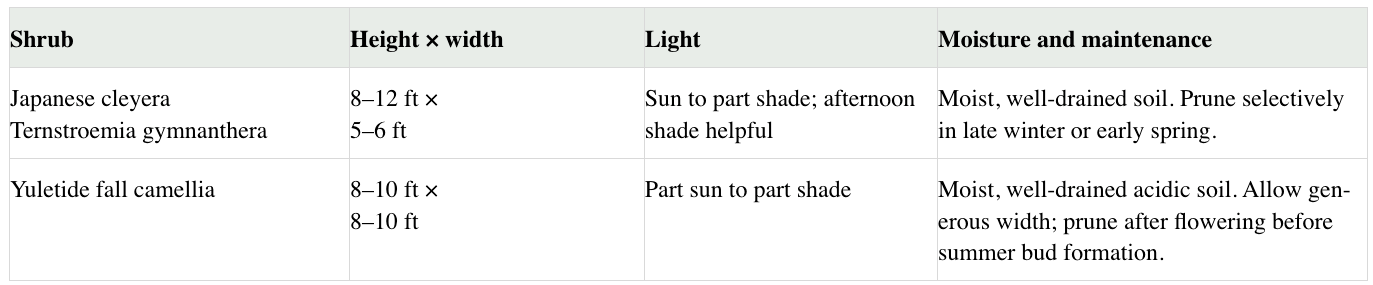
Japanese cleyera offers glossy evergreen foliage for a screen or hedge. The size above refers to the standard selection; ask about the exact plant on the tag before spacing your hedge.
Yuletide camellia combines evergreen structure with red flowers in the fall-to-winter season. It can work as a flowering screen where its mature width fits. Avoid planting it directly below a low window, and choose a position sheltered from drying winter winds.
Bring the length of your proposed screen and the height of the view you want to block. Ask our team to compare current plants, realistic spacing and how much screening their present size will provide.
Compact shrubs for foundations and walkways
Choose a variety that fits the bed at maturity instead of relying on repeated shearing to keep it small. For evergreen structure near the house, compare these selections.
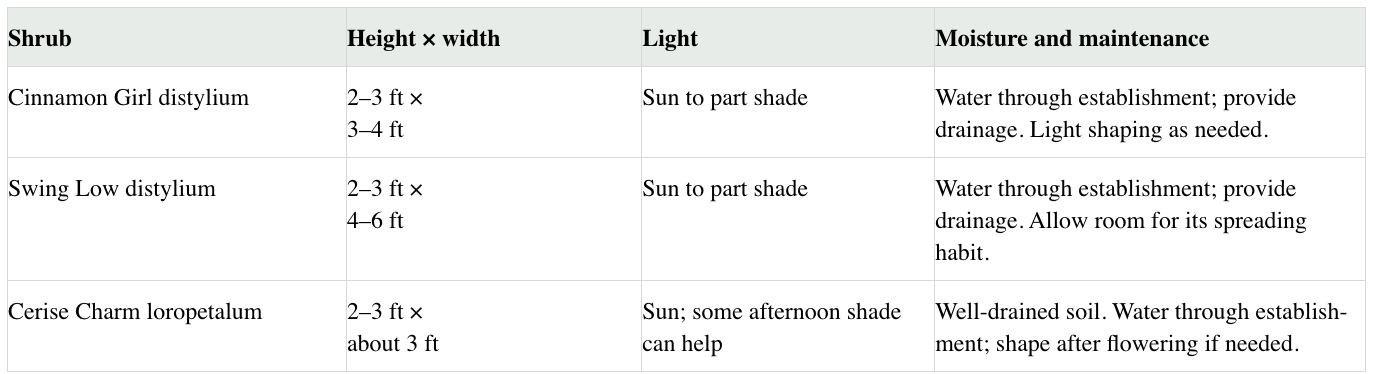
Cinnamon Girl and Swing Low distylium offer two different footprints. Cinnamon Girl is a starting point for a narrower bed; Swing Low spreads farther and needs more room beside a walkway. Neither is a tall privacy shrub.
Cerise Charm loropetalum adds dark burgundy foliage and spring flowers to a compact planting. Loropetalum and fringe flower are names for the same shrub, not two different choices. Check the cultivar: larger loropetalums can outgrow a small foundation bed.
Well-drained soil matters for all three. Distylium’s tolerance of damp conditions does not make it a solution for persistently waterlogged ground. If deer regularly visit your yard, ask about local browsing experience and protection for new plants.
Check availability for the exact cultivar you prefer, or bring a photo of your foundation bed so we can help you compare the plants in person.
Flowering shrubs for smaller garden beds
If summer flowers are the goal, Bobo and Little Lime panicle hydrangeas offer different sizes. Both lose their leaves in winter, so pair them with an evergreen planting if you also need year-round structure.

Bobo fits a smaller bed, while Little Lime makes a larger flowering presence. Both bloom on new growth. Their flowers can change color as the season progresses, but local temperatures influence that display. Provide water during dry periods, especially while the plants establish.
Starting with a patio or a rental near Clemson? Ask whether a compact hydrangea suits your outdoor container, sunlight and watering routine. Containers need drainage and more frequent moisture checks than garden beds. Get the property owner’s permission before planting in the ground.
All sizes in this guide are approximate landscape sizes, not the dimensions of plants currently for sale. Site conditions and time affect growth; check the exact plant tag before purchasing.
Is fall a good time to plant shrubs in Upstate South Carolina?
Fall is often a good planting season for hardy shrubs because cooler air reduces heat stress while soil can remain warm enough for root growth. Clemson Extension includes tree and shrub planting among its October garden tasks. Still, planting success depends on the shrub, the site and follow-up care.
Delay planting when soil is saturated or frozen. Ask about spring planting for a cold-sensitive selection in an exposed location. A newly planted shrub still needs moisture checks through fall and winter; rainfall alone may not keep its root ball moist.
For a strong start, find the uppermost roots before digging. Make the hole wide and shallow enough that those roots sit at or slightly above the surrounding soil level. Backfill with the existing soil, water the root ball thoroughly, and spread a modest layer of mulch while keeping it away from the stems. Avoid piling soil over the root ball or automatically adding fertilizer. Read Clemson’s shrub planting guidance for detailed instructions.
Questions to ask before buying shrubs
Which shrub will stay below my windows?
Start by measuring the height from soil level to the window and the bed’s depth. Cinnamon Girl distylium or Cerise Charm loropetalum may fit where a larger evergreen would not. Compare mature width as well as height.
Which flowering shrub also provides winter privacy?
An evergreen fall camellia such as Yuletide can provide both flowers and structure where its size fits. Bobo and Little Lime hydrangeas are deciduous and will not provide the same winter screening.
Does the Plant Library show what is in stock today?
No. Our Plant Library describes selections we carry, but a listing does not guarantee current stock. Use the availability request to ask about the exact variety, container size and number of plants you need. Available plants are for in-store pickup.
Visit the shrub yard at Head-Lee Nursery in Seneca
Whether you are settling into a new home, refreshing an established garden or choosing your first patio shrub, bring a garden photo and a few measurements. We can help you compare mature size, light requirements and care before you decide.
Find Head-Lee Nursery at 2365 Blue Ridge Blvd., Seneca, SC 29672, halfway between Seneca and Walhalla on Highway 28. Coming from Clemson? Check our location and current hours before your visit.
Check shrub availability or call 864-882-3663. Tell us what you want the shrub to do, and let’s find a choice that fits your garden.