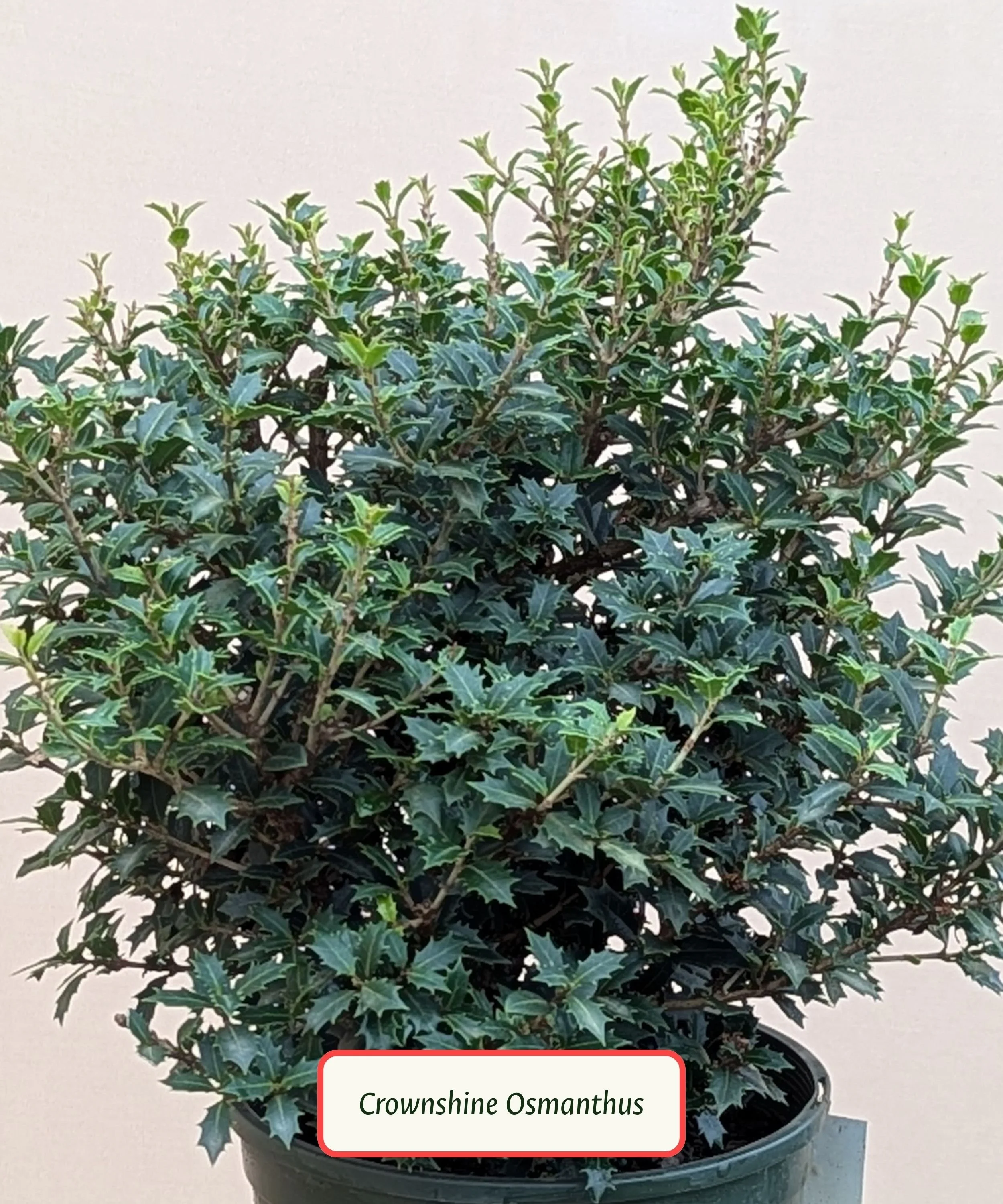
 Image 1 of 5
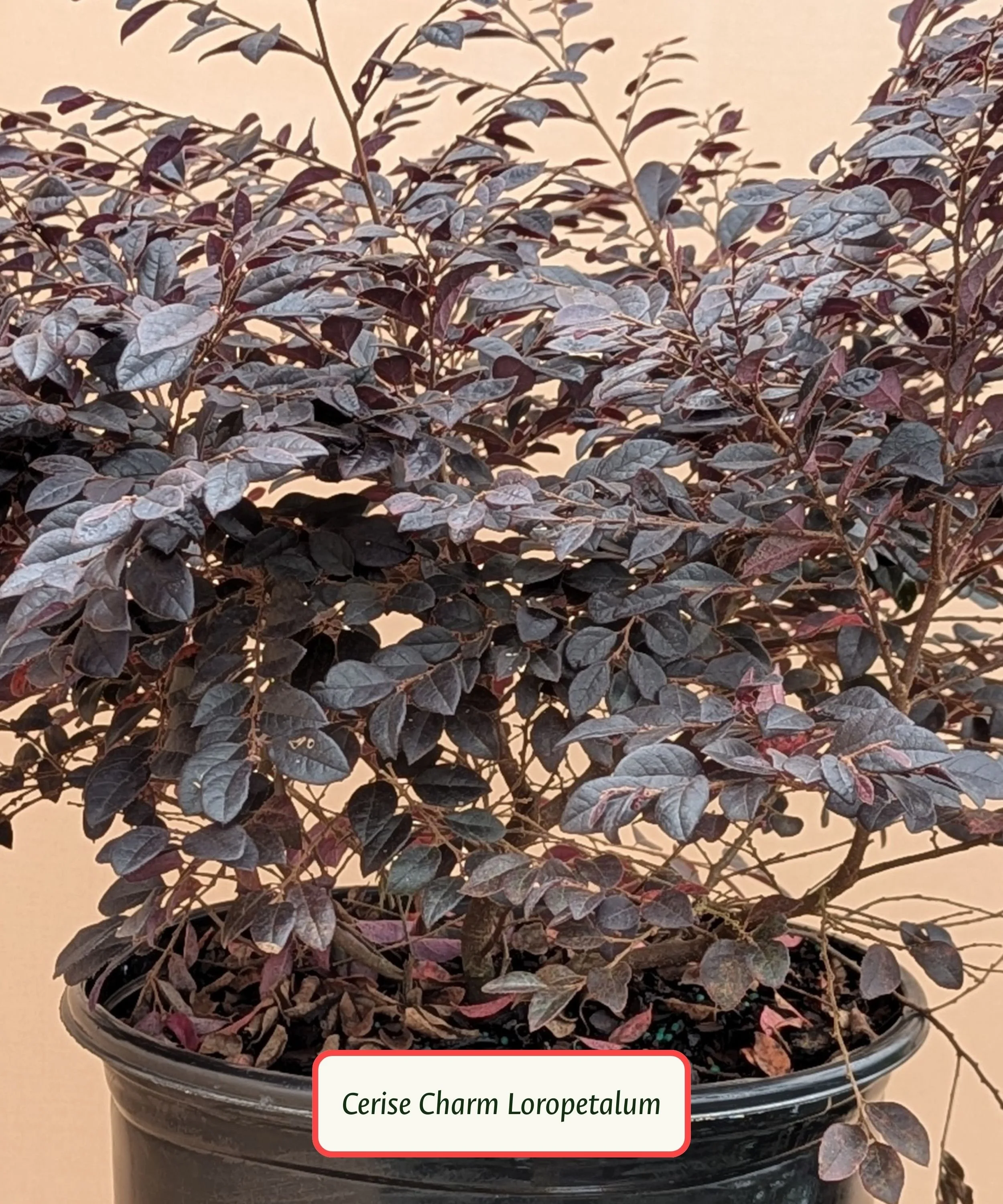
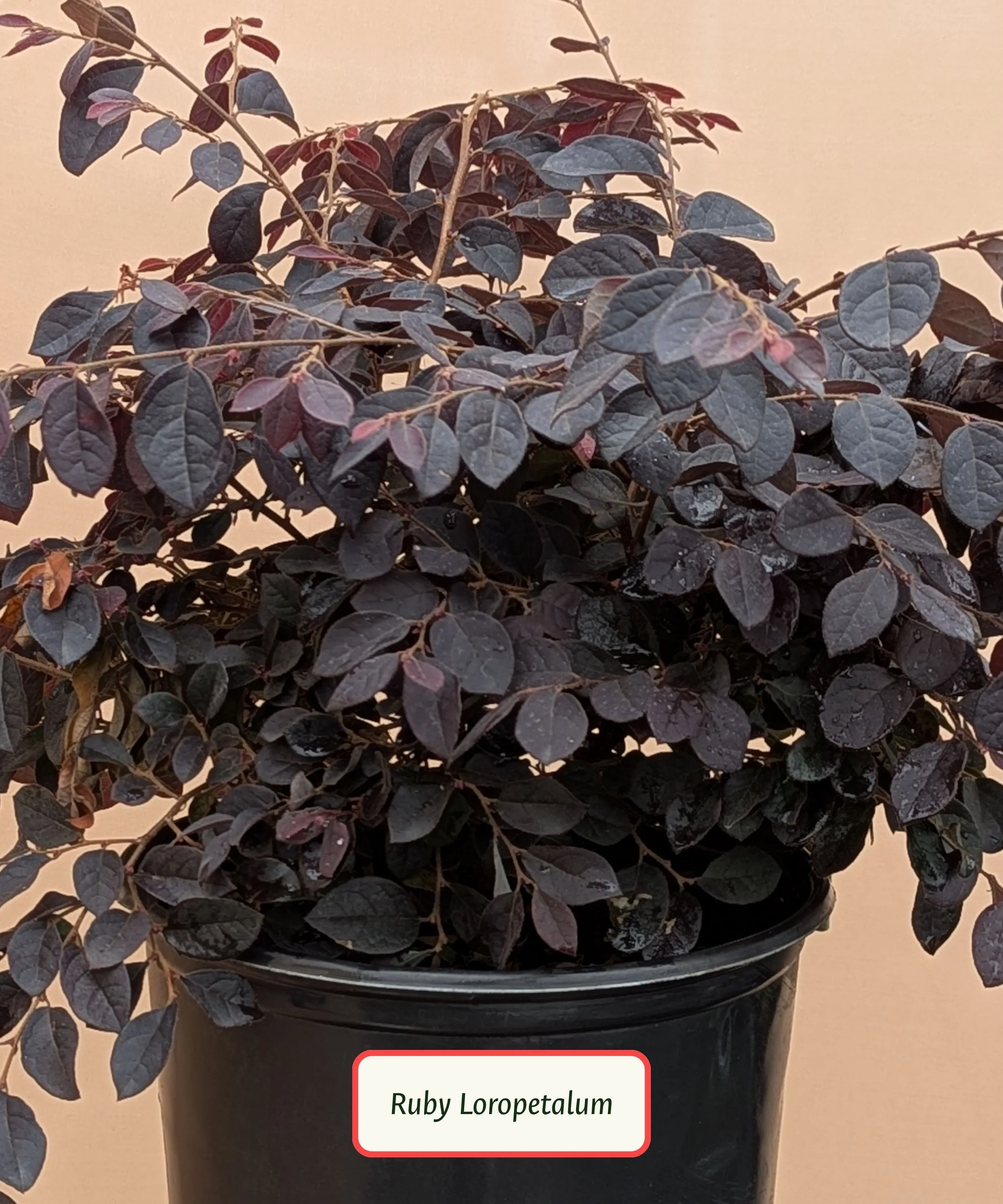 Image 2 of 5
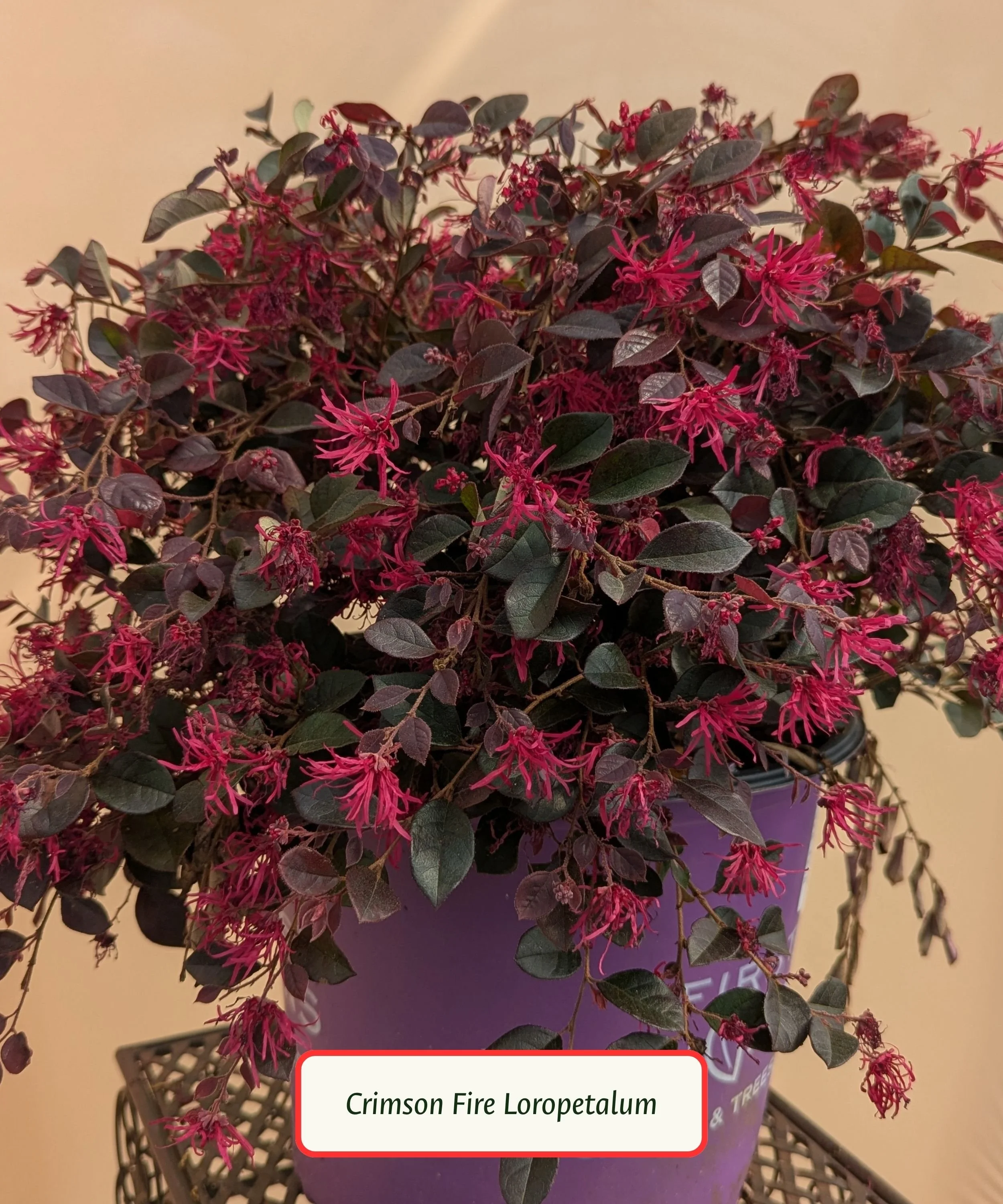 Image 3 of 5
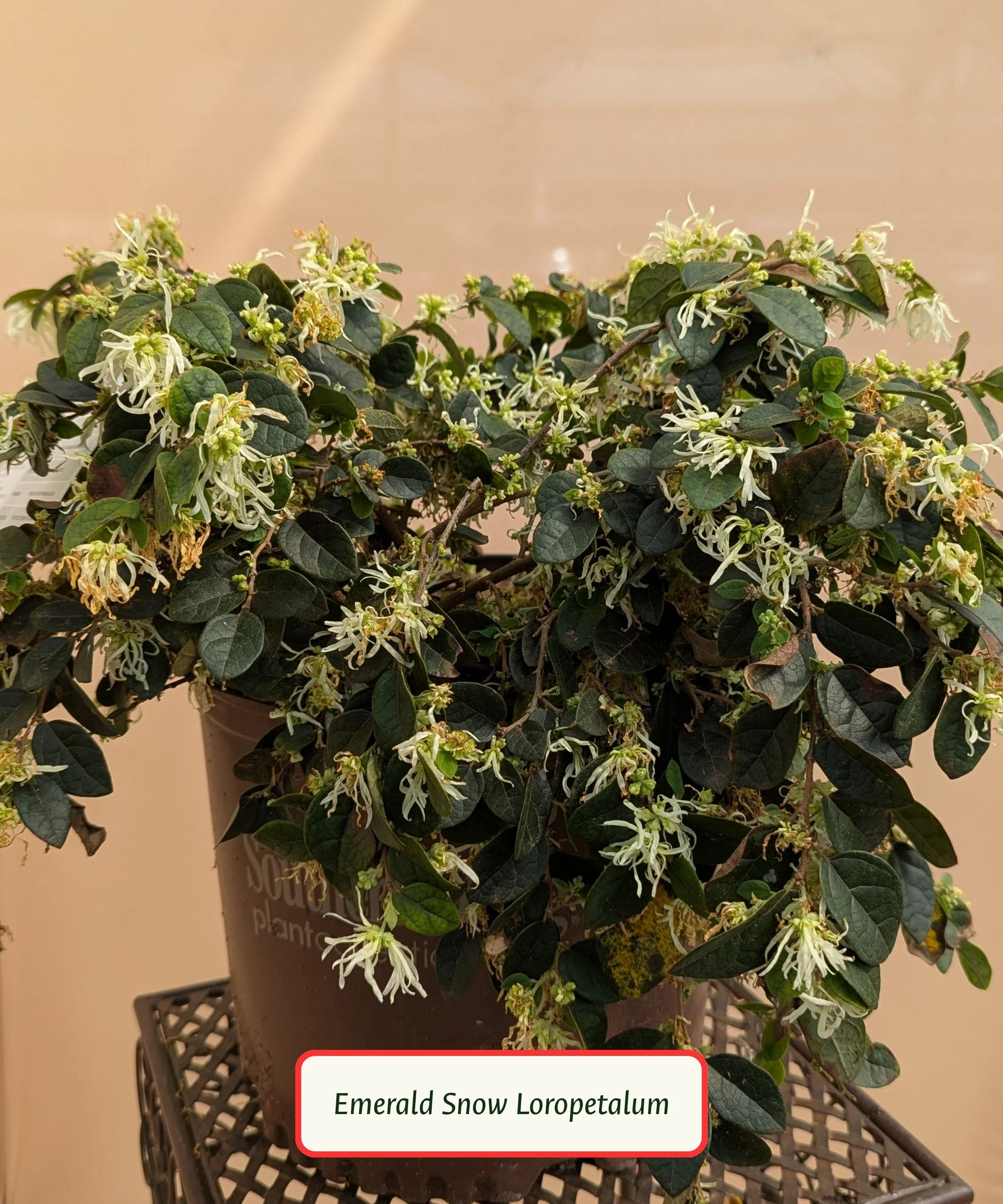 Image 4 of 5
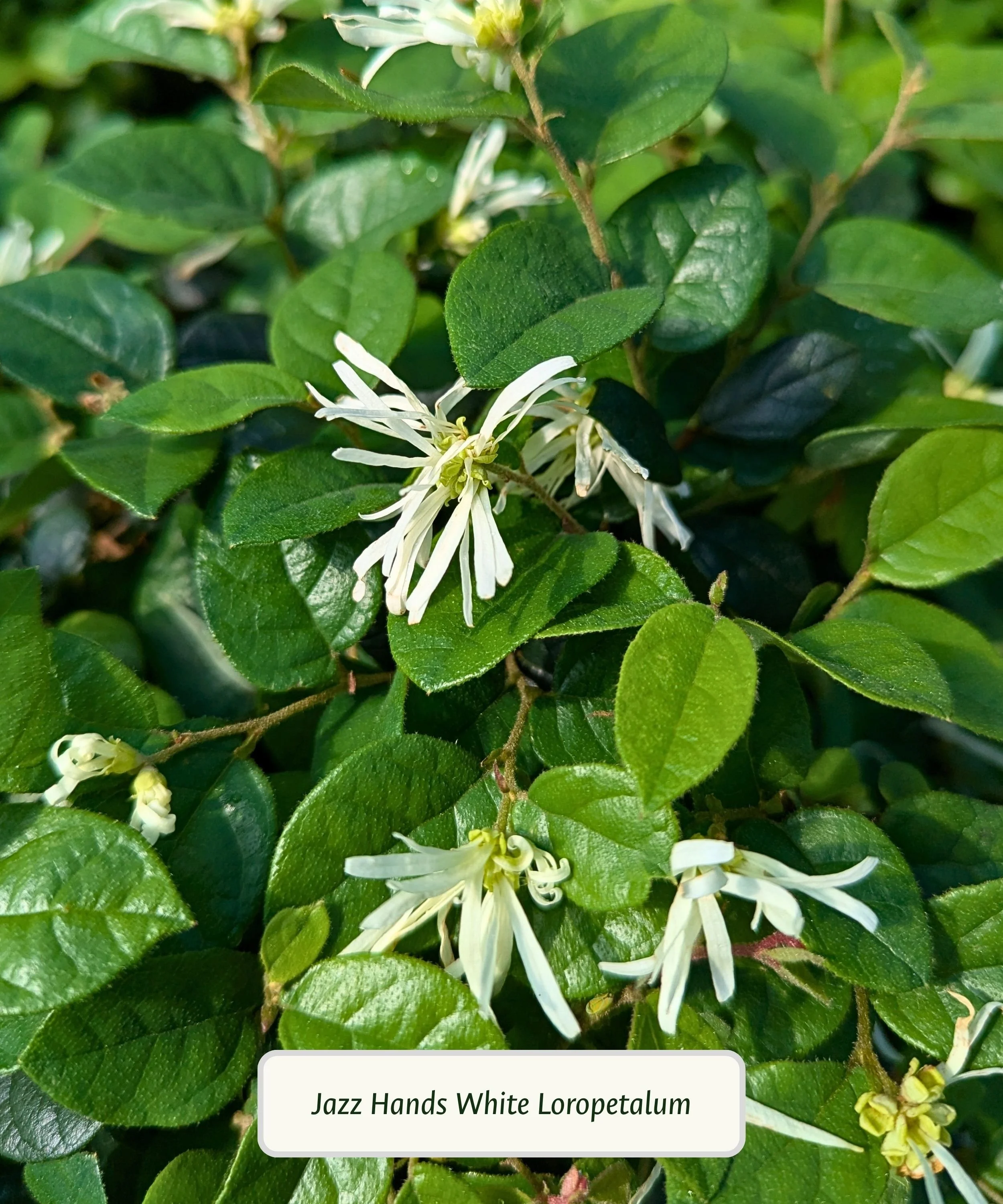 Image 5 of 5
Botanical Name: Loropetalum
Varieties we carry:
Crimson Fire
Chang's Ruby
Garnet Flame
Cerise Charm
The following varieties may be available for special request: Jazz Hands Variegated, Jazz Hands Dwarf White, Purple Pixie (spring only), Zhuzhou Fuschia, Emerald Snow
Seasons of availability: All year.
An evergreen woody shrub or small tree native to Asia. This fast growing shrub has a rounded to vase-shaped, multi-stemmed habit. Fringe Flower (usually referred to as Loropetalum to avaoid confusion with Fringe Tree) typically grows from 6 to 8 feet tall and equally as wide, but it may also reach a height up to 20 feet tall. Dwarf, semi-prostrate cultivars are primarily what is available. Purple Pixie, in particular, is very low growing but is more difficult to establish in cold areas. The species has dark green leaves with white flowers, but most cultivars available have reddish purple foliage with pink flowers that bloom in late winter and sometimes sporadically later in the year. Fringe Flower has no serious insect or disease issues, but mites and olive canker can sometimes cause problems. Root rot can occur in poorly drained soils. Deer may be a concern in pressured areas. Fringe Flower is versatile, being used for borders, screens, and foundations. It can be planted as a specimen, in mass, in small groups, and as an espalier. If trained, they can form a beautiful small tree.
Fringe Flower prefers full sun with some afternoon partial shade for the best flowering and leaf color. It performs best in well drained acidic soil. Hardy to growing Zones 7-9. Overgrown loropetalums may be cut back after blooming to reduce size. While plants tolerate heavy pruning, it is best to remove only one-quarter to one-third of the plant at a time. Avoid pruing in late summer. Winter protection is encouraged for young plants. Mulch the prepared soil base to retain moisture and fertilize with a slow-release fertilizer to encourage new growth.
Ideal planting seasons: Fall and Spring.
Botanical Name: Loropetalum
Varieties we carry:
Crimson Fire
Chang's Ruby
Garnet Flame
Cerise Charm
The following varieties may be available for special request: Jazz Hands Variegated, Jazz Hands Dwarf White, Purple Pixie (spring only), Zhuzhou Fuschia, Emerald Snow
Seasons of availability: All year.
An evergreen woody shrub or small tree native to Asia. This fast growing shrub has a rounded to vase-shaped, multi-stemmed habit. Fringe Flower (usually referred to as Loropetalum to avaoid confusion with Fringe Tree) typically grows from 6 to 8 feet tall and equally as wide, but it may also reach a height up to 20 feet tall. Dwarf, semi-prostrate cultivars are primarily what is available. Purple Pixie, in particular, is very low growing but is more difficult to establish in cold areas. The species has dark green leaves with white flowers, but most cultivars available have reddish purple foliage with pink flowers that bloom in late winter and sometimes sporadically later in the year. Fringe Flower has no serious insect or disease issues, but mites and olive canker can sometimes cause problems. Root rot can occur in poorly drained soils. Deer may be a concern in pressured areas. Fringe Flower is versatile, being used for borders, screens, and foundations. It can be planted as a specimen, in mass, in small groups, and as an espalier. If trained, they can form a beautiful small tree.
Fringe Flower prefers full sun with some afternoon partial shade for the best flowering and leaf color. It performs best in well drained acidic soil. Hardy to growing Zones 7-9. Overgrown loropetalums may be cut back after blooming to reduce size. While plants tolerate heavy pruning, it is best to remove only one-quarter to one-third of the plant at a time. Avoid pruing in late summer. Winter protection is encouraged for young plants. Mulch the prepared soil base to retain moisture and fertilize with a slow-release fertilizer to encourage new growth.
Ideal planting seasons: Fall and Spring.