 Image 1 of 3
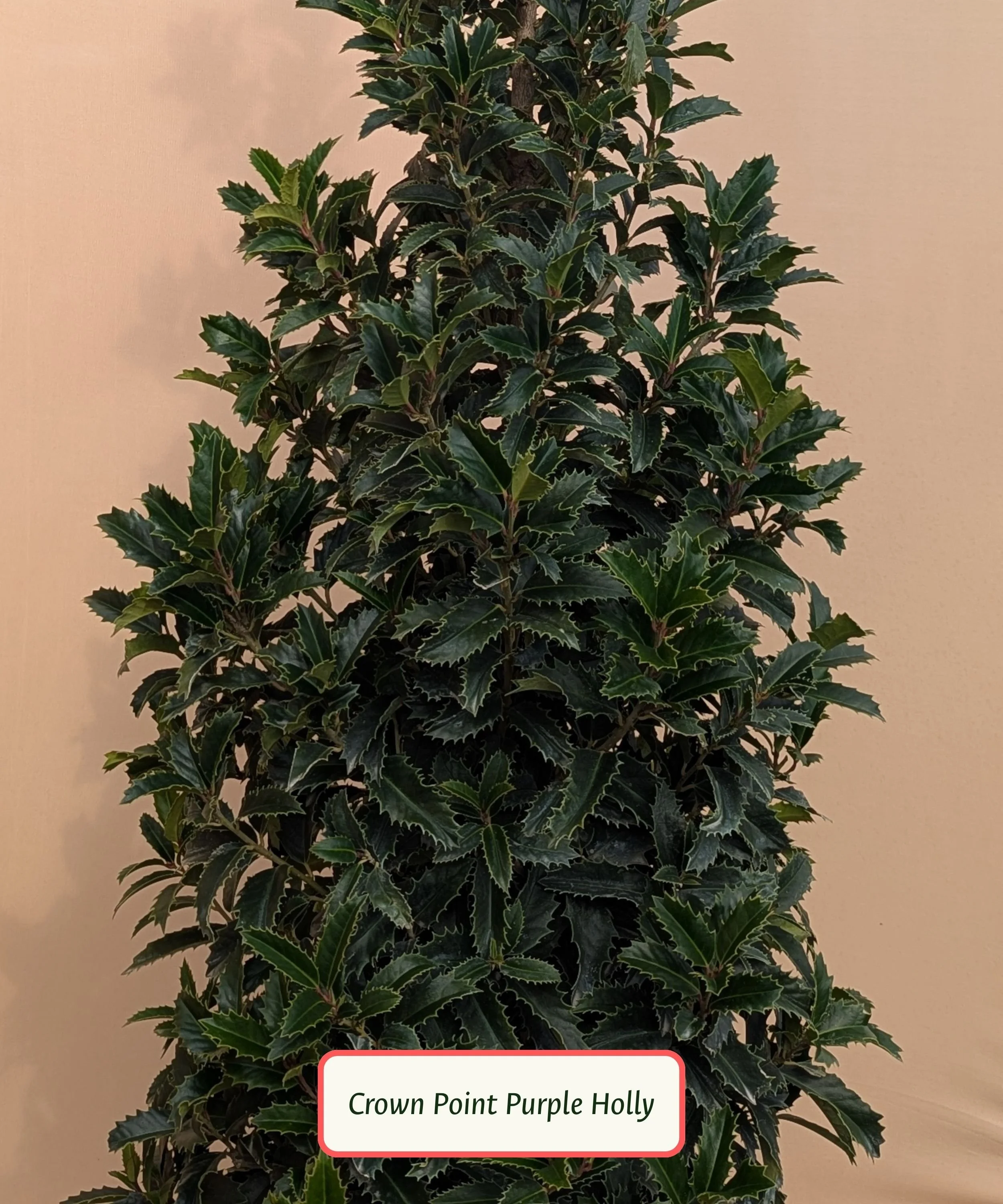 Image 2 of 3
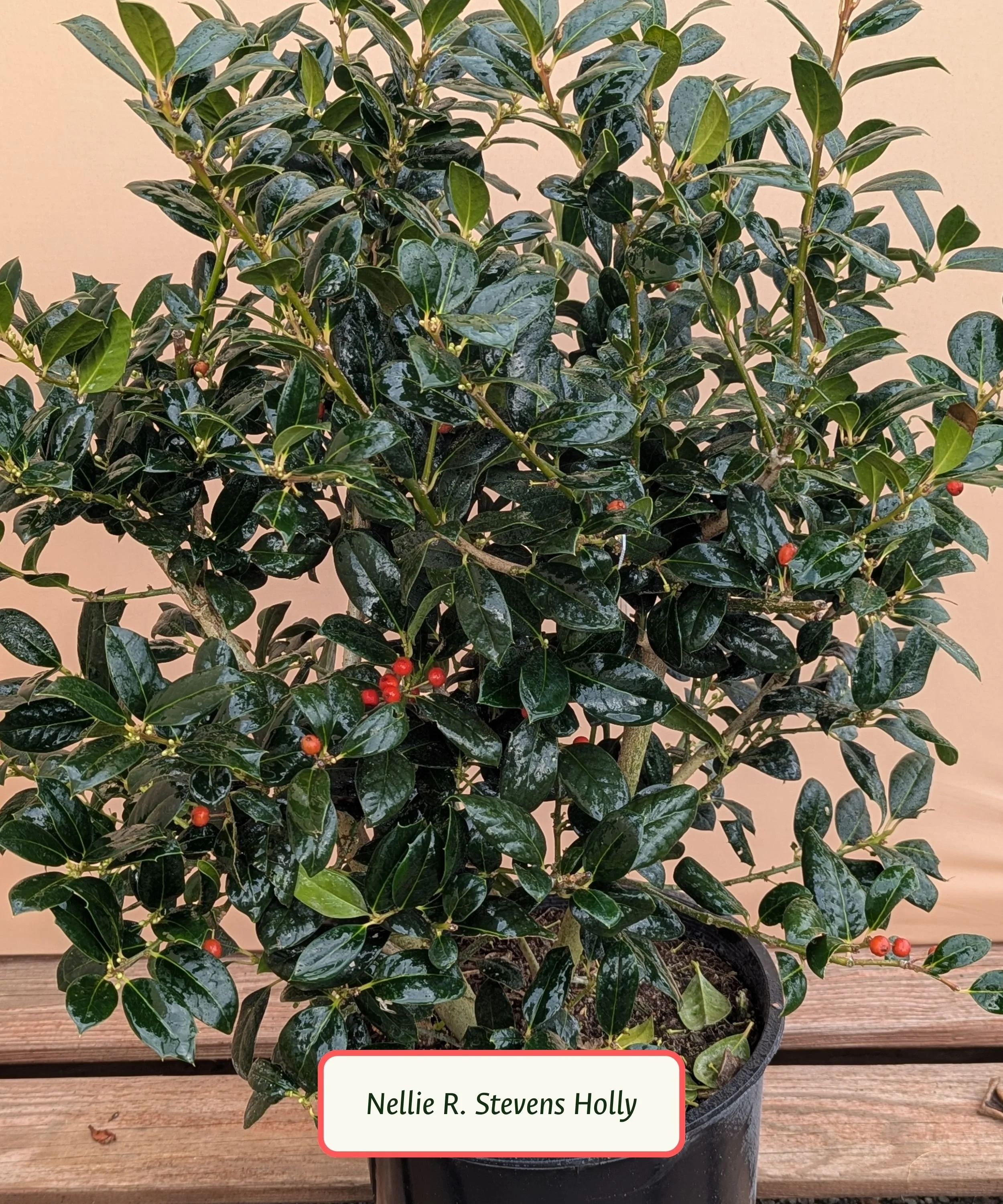 Image 3 of 3
Botanical Name: Ilex (hybrid tree)
Nellie R Stevens
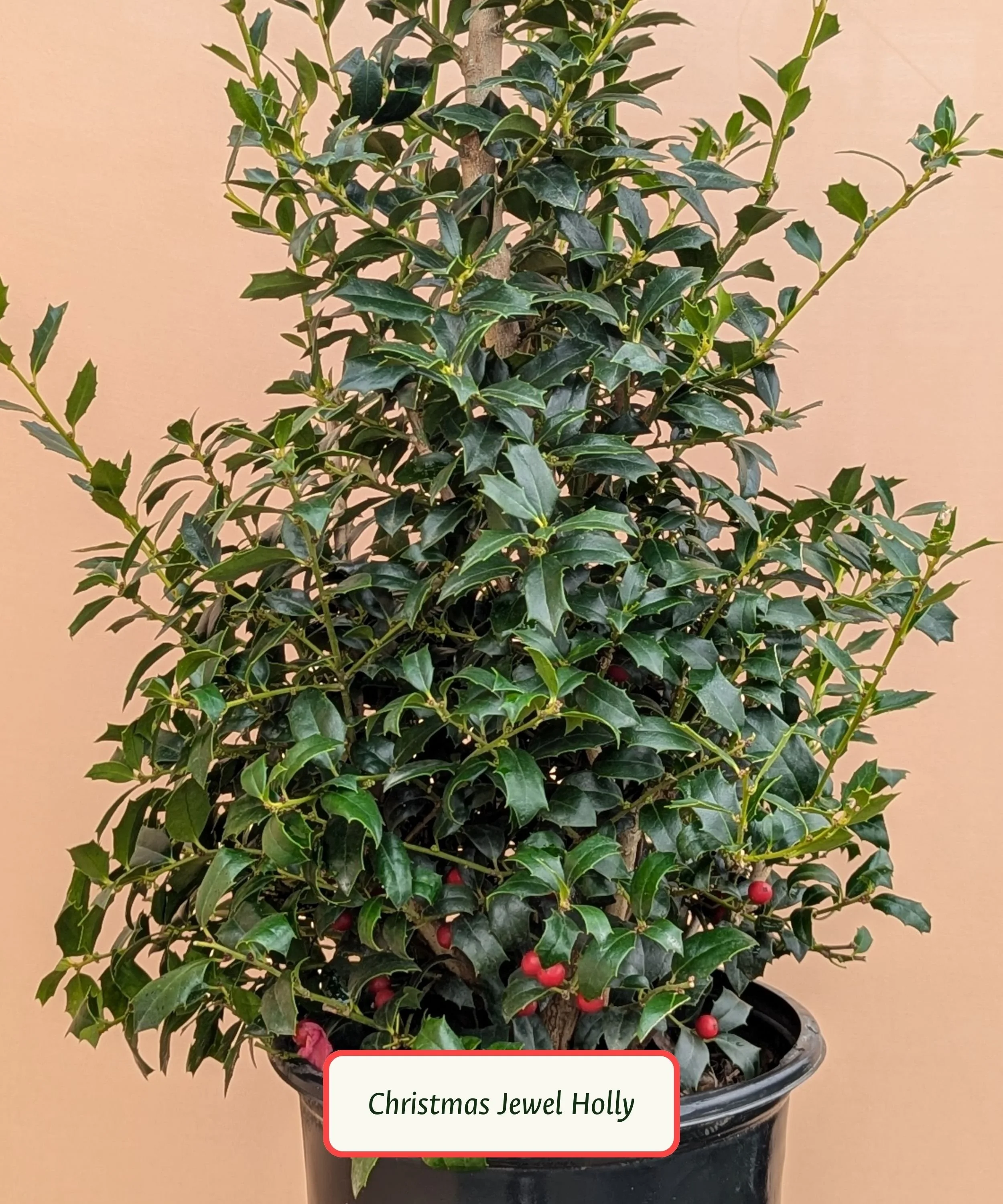
Christmas Jewel
Crown Pointe
The following varieties may be available for special request: Monarch, My Lady, Grace, Oakland, Oakleaf, Golden Oakleaf, Liberty.
Seasons of availability: All year.
A broadleaf, woody, small tree or large shrub quickly growing 15-30’ tall and 8-25’ wide. Most varieties are heavy producers of bright red berries. These tree Hollies are hybrids, (typically a cross between English and Chinese) and may produce fruits without male pollinizers, and may even become pollinized by nearby Chinese Hollies. Tree Hollies are dense evergreens with conical to pyramidal habits with spiny leaves. Holly trees are sometimes susceptible to deer browsing, particularly when young. Pests that can be a minor problem include holly leafminer, scale, spider mites, and whiteflies. Leafspot diseases are rarely a concern, but quality of foliage can be affected. In the landscape the tree form Holly can be used as a barrier or screen with its dense, prickly foliage. They can also can be used as a specimen or foundation planting.
Many tree form Hollies tolerate drought and heat better than many other Hollies and are hardy to growing Zones 6-9. This plant does best in full sun to partial shade and can tolerate a variety of soil types, including heavy clay. They prefer acidic soil. Prune in late winter as needed to maintain its shape. When pruning, keep in mind that next year's blossoms and fruit will appear on new growth. Mulch the prepared soil base to retain moisture and fertilize with a slow-release fertilizer to encourage new growth.
Ideal planting seasons: Fall, Winter, and Spring.
Botanical Name: Ilex (hybrid tree)
Nellie R Stevens
Christmas Jewel
Crown Pointe
The following varieties may be available for special request: Monarch, My Lady, Grace, Oakland, Oakleaf, Golden Oakleaf, Liberty.
Seasons of availability: All year.
A broadleaf, woody, small tree or large shrub quickly growing 15-30’ tall and 8-25’ wide. Most varieties are heavy producers of bright red berries. These tree Hollies are hybrids, (typically a cross between English and Chinese) and may produce fruits without male pollinizers, and may even become pollinized by nearby Chinese Hollies. Tree Hollies are dense evergreens with conical to pyramidal habits with spiny leaves. Holly trees are sometimes susceptible to deer browsing, particularly when young. Pests that can be a minor problem include holly leafminer, scale, spider mites, and whiteflies. Leafspot diseases are rarely a concern, but quality of foliage can be affected. In the landscape the tree form Holly can be used as a barrier or screen with its dense, prickly foliage. They can also can be used as a specimen or foundation planting.
Many tree form Hollies tolerate drought and heat better than many other Hollies and are hardy to growing Zones 6-9. This plant does best in full sun to partial shade and can tolerate a variety of soil types, including heavy clay. They prefer acidic soil. Prune in late winter as needed to maintain its shape. When pruning, keep in mind that next year's blossoms and fruit will appear on new growth. Mulch the prepared soil base to retain moisture and fertilize with a slow-release fertilizer to encourage new growth.
Ideal planting seasons: Fall, Winter, and Spring.