Fragrant, shade tolerant, highly reliable, broadleaf evergreen.
Botanical Name: Osmanthus
Varieties we carry:
The following varieties may be available for special request: San Jose, Carl Wheeler, Party Lights
Seasons of availability: All year.
Landscape Value:
A highly reliable, woody, broadleaf evergreen shrub with an upright habit. The most common species available is Osmanthus fragrans, but representatives of heterophyllus, delavayi, and hybrids are available as well. Most varieties grow moderately quickly to 12’ tall and 8’ wide. ‘Goshiki’ and ‘Party Princess’ are relatively small, growing between 3’ and 5’ tall on average. All varieties have small fragrant flowers in the fall, but Osmanthus fragrans reliably blooms in the spring as well. Fair to good deer resistance depending on variety. There are few disease or insect concerns. Phytophthora root rot is sometimes a concern in poorly draining soils. Moderate wildlife value by offering shelter and pollinator support.
Plant Care:
Plant Tea Olive in partial sun to shade and in moist soils with good drainage. In our southern climate, some afternoon shade is a beneficial for large leaf varieties. Hardy to growing Zones 7-9, Tea Olive can be used in borders, screens, hedges, and as a specimen. Prune in spring after bloom has finished for best results. Mulch the prepared soil base to retain moisture and fertilize with a slow-release fertilizer to encourage new growth.
Ideal planting seasons: Fall, Winter, and Spring.
Fragrant, shade tolerant, highly reliable, broadleaf evergreen.
Botanical Name: Osmanthus
Varieties we carry:
The following varieties may be available for special request: San Jose, Carl Wheeler, Party Lights
Seasons of availability: All year.
Landscape Value:
A highly reliable, woody, broadleaf evergreen shrub with an upright habit. The most common species available is Osmanthus fragrans, but representatives of heterophyllus, delavayi, and hybrids are available as well. Most varieties grow moderately quickly to 12’ tall and 8’ wide. ‘Goshiki’ and ‘Party Princess’ are relatively small, growing between 3’ and 5’ tall on average. All varieties have small fragrant flowers in the fall, but Osmanthus fragrans reliably blooms in the spring as well. Fair to good deer resistance depending on variety. There are few disease or insect concerns. Phytophthora root rot is sometimes a concern in poorly draining soils. Moderate wildlife value by offering shelter and pollinator support.
Plant Care:
Plant Tea Olive in partial sun to shade and in moist soils with good drainage. In our southern climate, some afternoon shade is a beneficial for large leaf varieties. Hardy to growing Zones 7-9, Tea Olive can be used in borders, screens, hedges, and as a specimen. Prune in spring after bloom has finished for best results. Mulch the prepared soil base to retain moisture and fertilize with a slow-release fertilizer to encourage new growth.
Ideal planting seasons: Fall, Winter, and Spring.


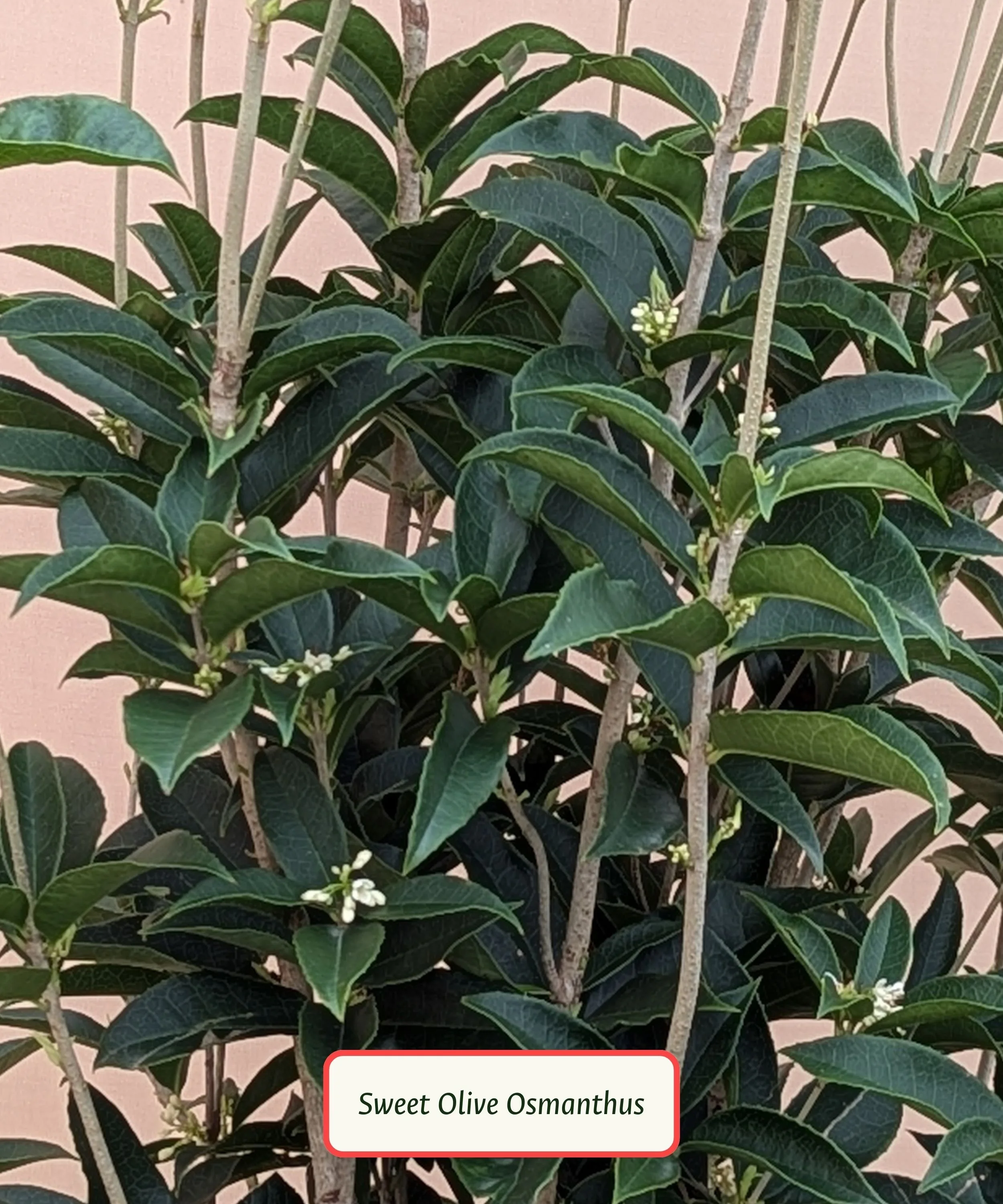 Image 1 of 6
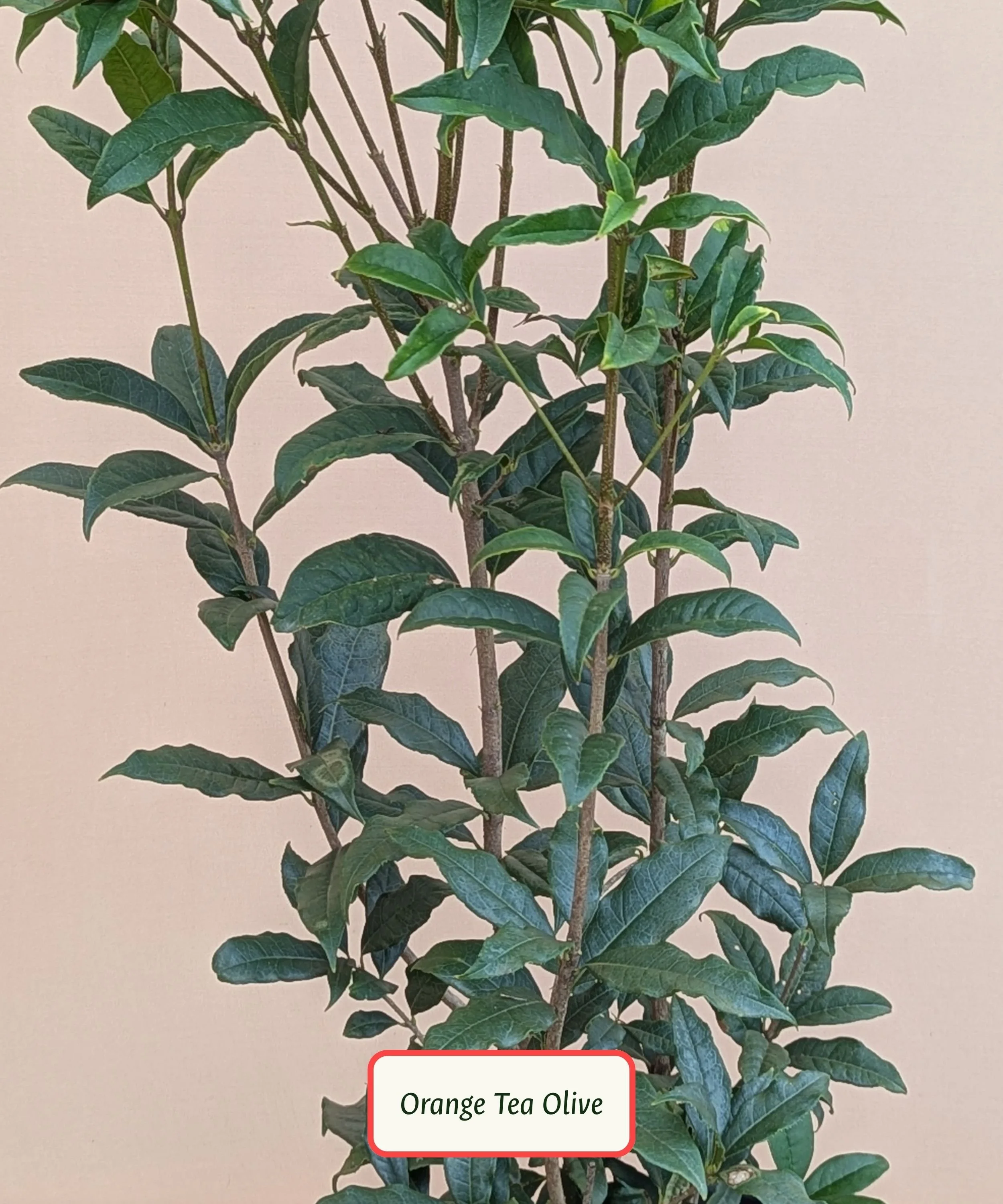 Image 2 of 6
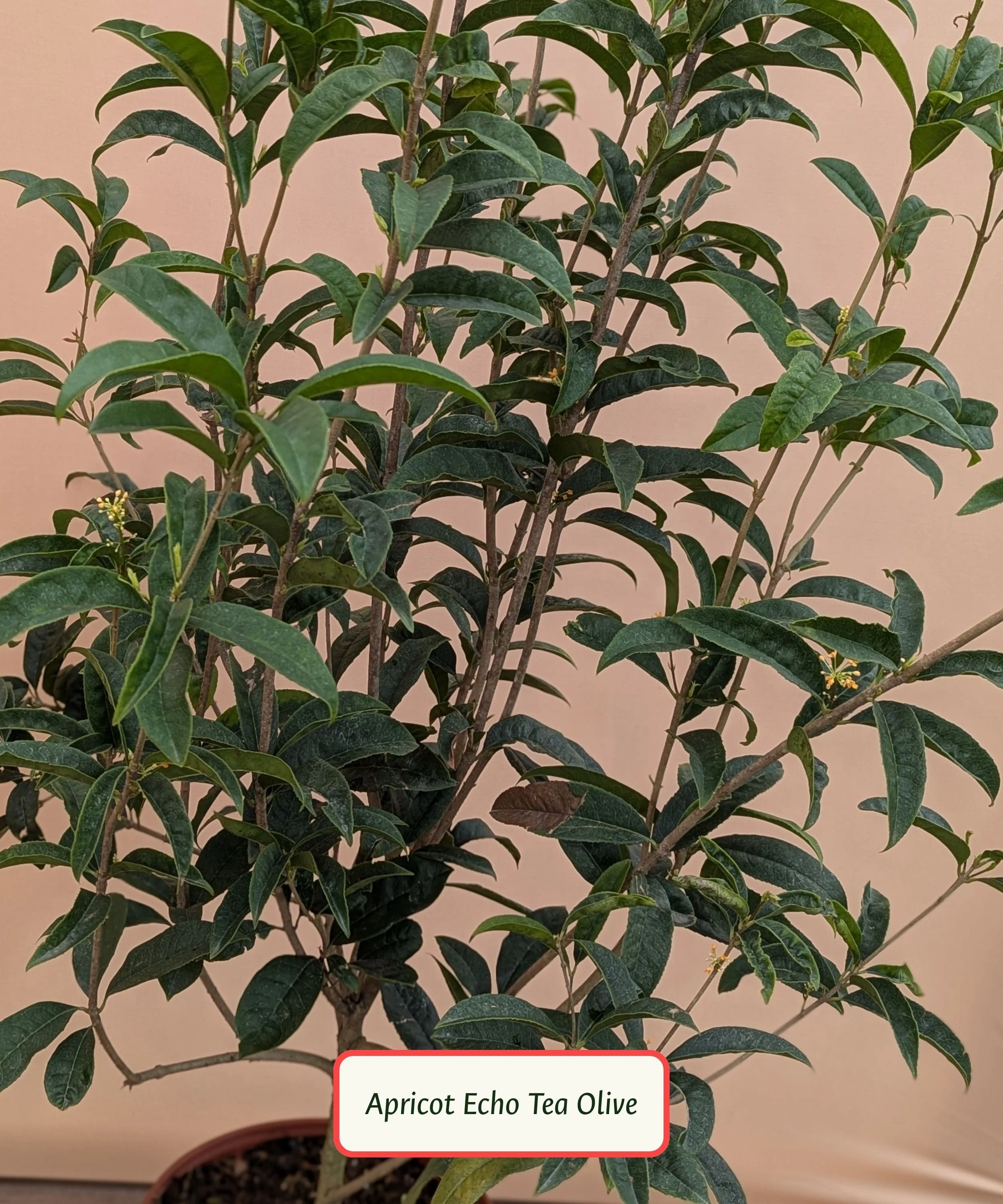 Image 3 of 6
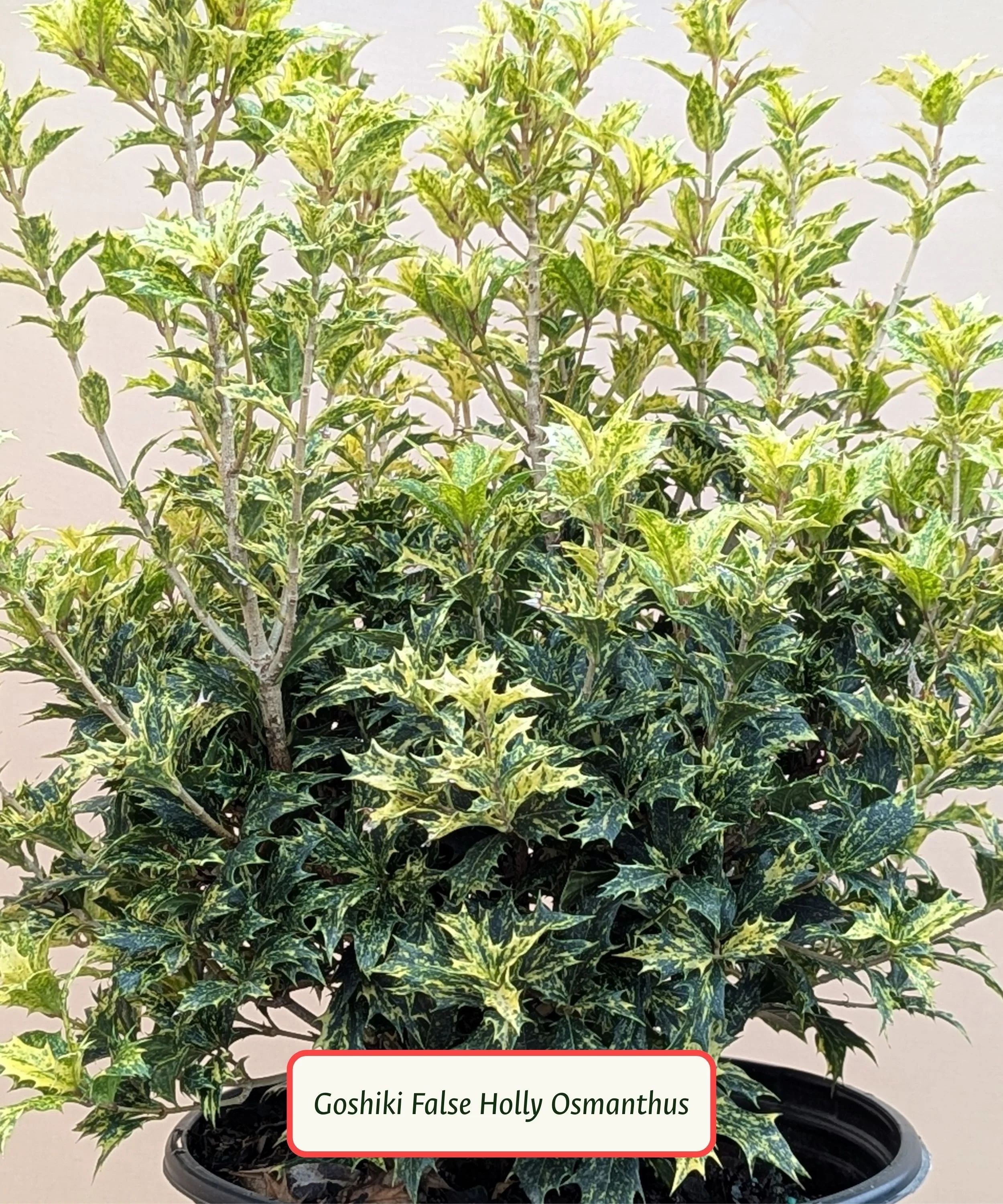 Image 4 of 6
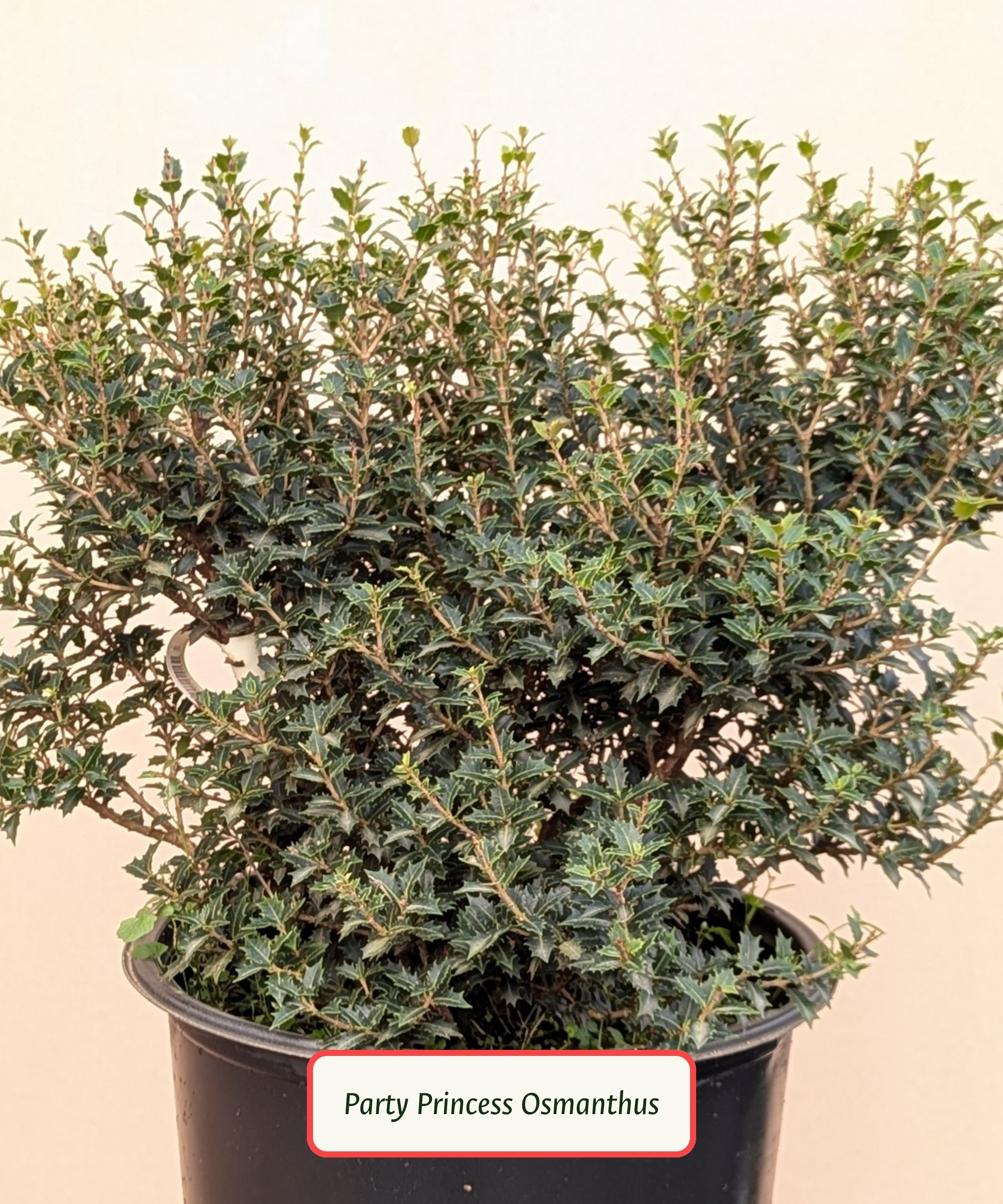 Image 5 of 6
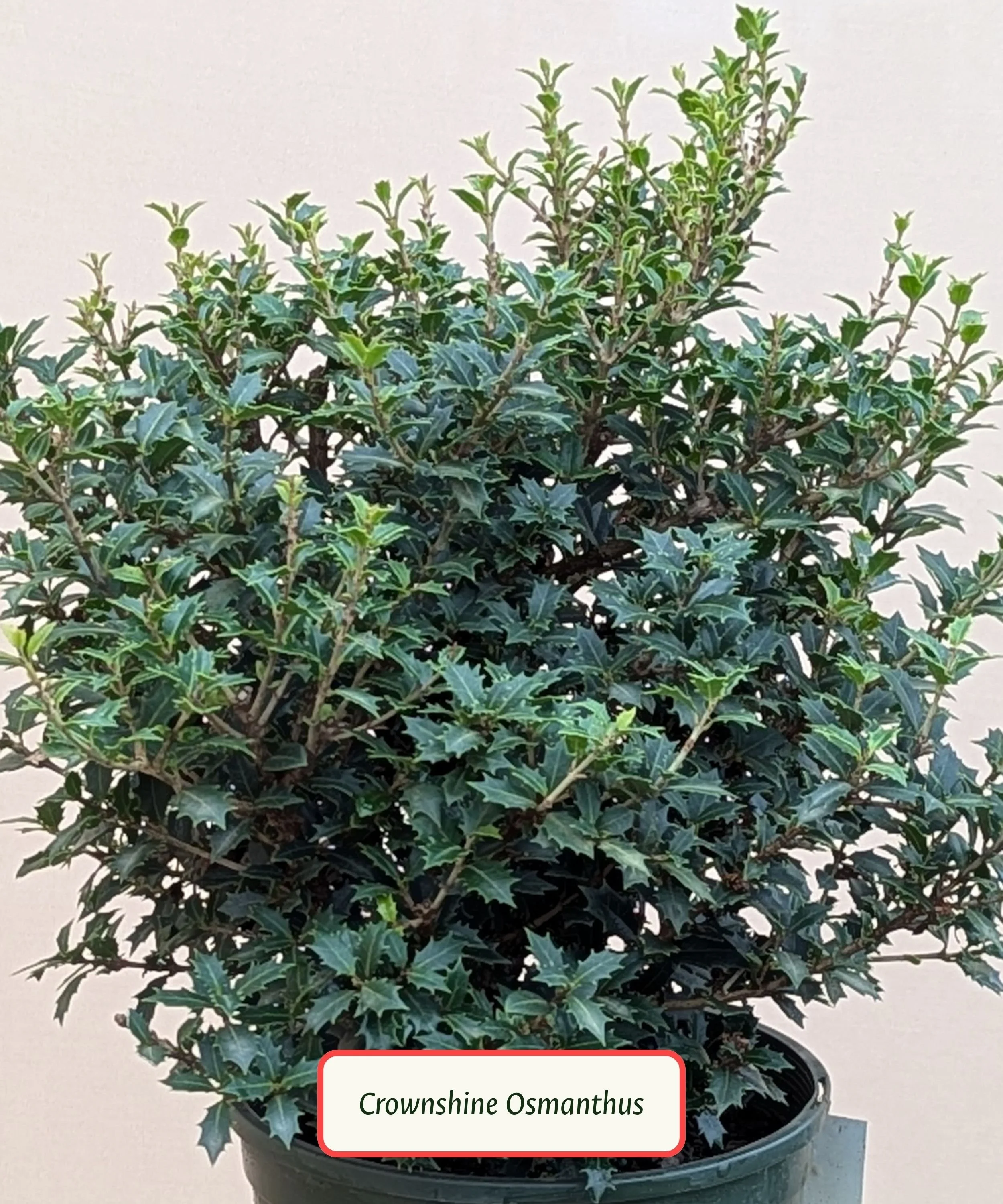 Image 6 of 6