 Image 1 of 1
Botanical Name: Rosmarinus officinalis
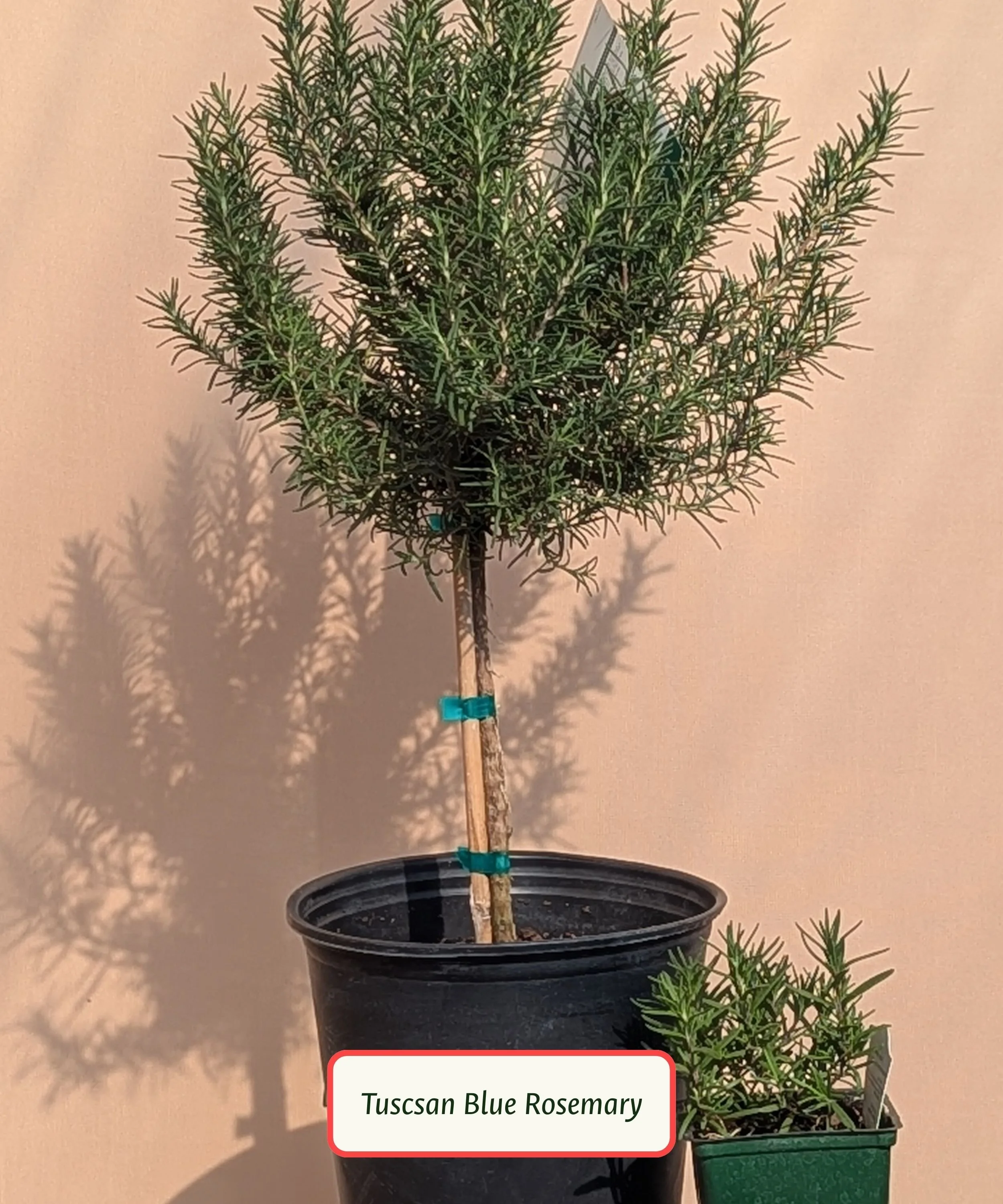
Tuscan Blue
Huntington Carpet
Prostrata
Chef's Choice/Roman Beauty
Seasons of availability: Spring to Fall
An aromatic evergreen shrub grown as an ornamental or culinary herb. Moderate grow rate up 4 to 5’ tall for the upright varieties like Tuscan Blue. Groundcover varieties may not exceed 18” in hight, but can exceed 5’ wide. Needle-like leaves are closely spaced on the stems and often have a grey coloration. They are very aromatic with a strong flavor useful in cooking, but this also acts a deterrent for deer. Small lavender to blue flowers begin in Spring into Summer.
Rosemary does best in slightly acidic, dry to medium, well-drained soils in full sun. This herb tolerates drought, partial shade, salt, heavy pruning, and most soil types except clay and is hardy in growing Zones 8-9. Poor circulation and high humidity can cause powdery mildew while overwatering is a common cause of plant decline or death. Plants grown in containers will require steady water in hot weather.
Botanical Name: Rosmarinus officinalis
Tuscan Blue
Huntington Carpet
Prostrata
Chef's Choice/Roman Beauty
Seasons of availability: Spring to Fall
An aromatic evergreen shrub grown as an ornamental or culinary herb. Moderate grow rate up 4 to 5’ tall for the upright varieties like Tuscan Blue. Groundcover varieties may not exceed 18” in hight, but can exceed 5’ wide. Needle-like leaves are closely spaced on the stems and often have a grey coloration. They are very aromatic with a strong flavor useful in cooking, but this also acts a deterrent for deer. Small lavender to blue flowers begin in Spring into Summer.
Rosemary does best in slightly acidic, dry to medium, well-drained soils in full sun. This herb tolerates drought, partial shade, salt, heavy pruning, and most soil types except clay and is hardy in growing Zones 8-9. Poor circulation and high humidity can cause powdery mildew while overwatering is a common cause of plant decline or death. Plants grown in containers will require steady water in hot weather.