 Image 1 of 2
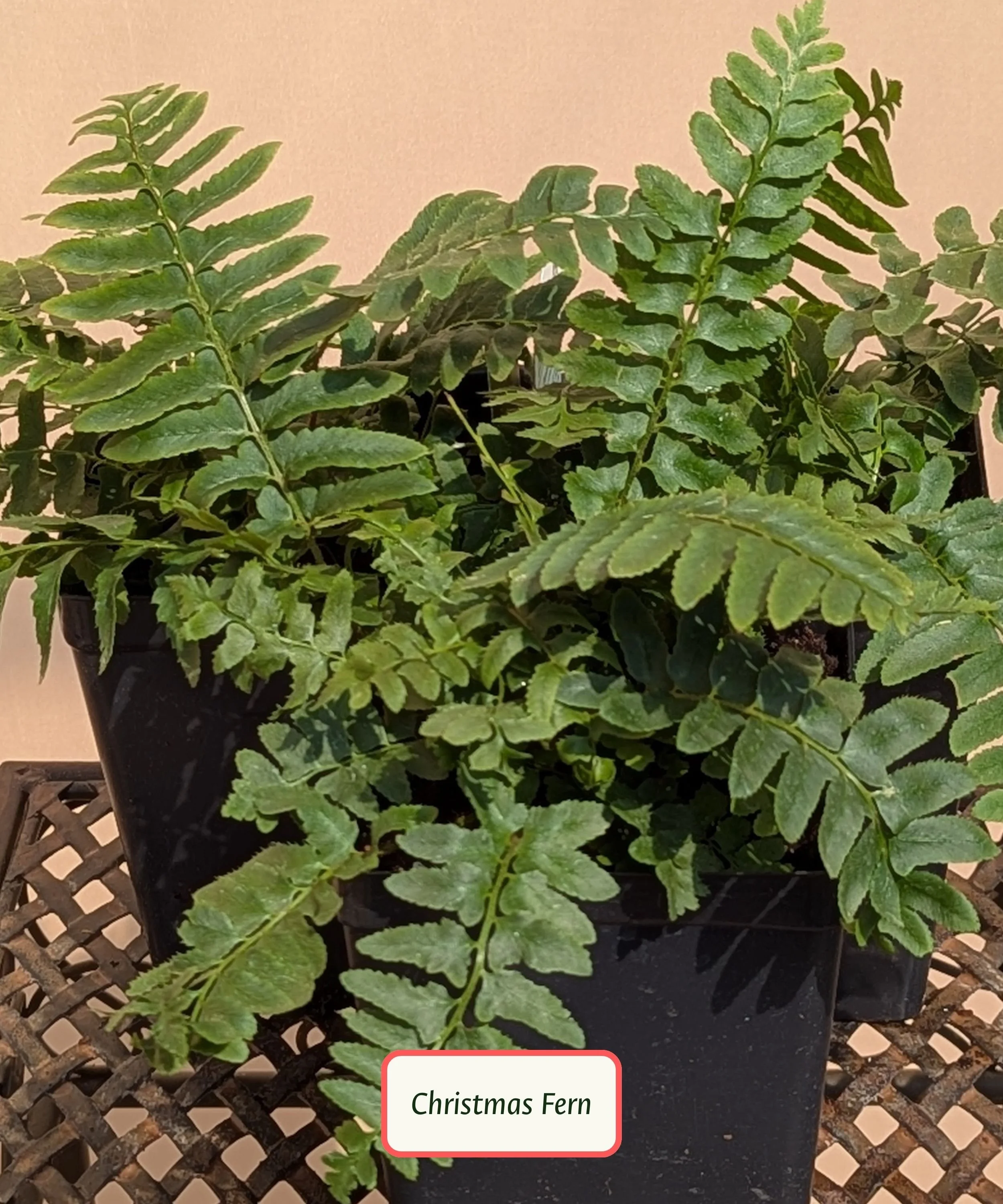 Image 2 of 2
Botanical Name: Variable
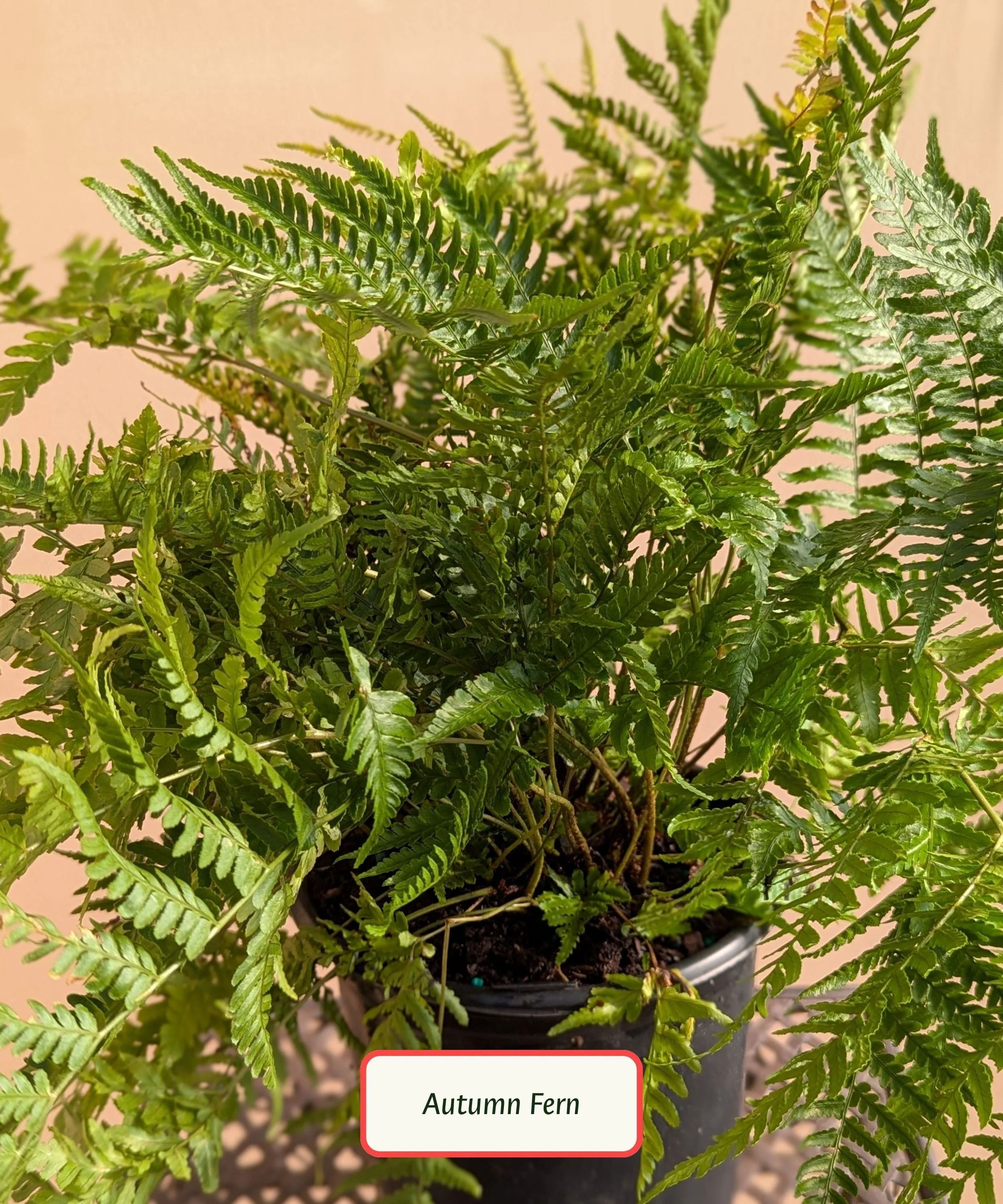
Autumn
Holly
Japanese Painted
Christmas
Ostrich
The following varieties may be available for special request: Korean Rock, Lady, Ghost, Cinnamon, Royal, Maidenhair, Tassel
Seasons of availability: Primarily Spring, some varieties such as Autumn Fern in Fall as well.
Perennial ferns generally form an arching vase-shaped clump reaching a mature size of 2 feet tall and up to 3 feet wide depending on variety. Native and non native varieties are available particularly during the spring. Perennial Ferns vary from evergreen to deciduous (dying back in winter) and offer unique textures from the coppery new growth of Autumn Fern to the delicate fronds of Lady Fern. Most ferns will spread slowly over time through underground creeping rhizomes. Ferns do not have fruits, reproducing via spores instead. Perennial Ferns are excellent at adding texture and color to gardens, working in containers, and acting as excellent groundcovers or companion plants in shade gardens. Ferns generally have good deer resistance. Perennial Ferns are generally tough but can face issues with aphids, spider mites, mealybugs, scale, and slugs which may cause yellowing, distortion, or webbing. Perennial Ferns offer wildlife value primarily as shelter.
Perennial Ferns typically like acidic, constantly moist soils that are high in organic matter. Once fully established, some ferns can tolerate brief droughts. They can take dappled sun to deep shade. Protect plants from drying winds. Overwatering may cause root rot or leaf spots. Most perennial ferns available are hardy to growing Zones 5-9, but some varieties like holly fern may only tolerate Zones 8-9. It may be helpful to trim off the old growth to make room for the fresh new fronds to show through, particularly on evergreen ferns. Mulch the prepared soil base to retain moisture and fertilize with a slow-release fertilizer to encourage new growth.
Botanical Name: Variable
Autumn
Holly
Japanese Painted
Christmas
Ostrich
The following varieties may be available for special request: Korean Rock, Lady, Ghost, Cinnamon, Royal, Maidenhair, Tassel
Seasons of availability: Primarily Spring, some varieties such as Autumn Fern in Fall as well.
Perennial ferns generally form an arching vase-shaped clump reaching a mature size of 2 feet tall and up to 3 feet wide depending on variety. Native and non native varieties are available particularly during the spring. Perennial Ferns vary from evergreen to deciduous (dying back in winter) and offer unique textures from the coppery new growth of Autumn Fern to the delicate fronds of Lady Fern. Most ferns will spread slowly over time through underground creeping rhizomes. Ferns do not have fruits, reproducing via spores instead. Perennial Ferns are excellent at adding texture and color to gardens, working in containers, and acting as excellent groundcovers or companion plants in shade gardens. Ferns generally have good deer resistance. Perennial Ferns are generally tough but can face issues with aphids, spider mites, mealybugs, scale, and slugs which may cause yellowing, distortion, or webbing. Perennial Ferns offer wildlife value primarily as shelter.
Perennial Ferns typically like acidic, constantly moist soils that are high in organic matter. Once fully established, some ferns can tolerate brief droughts. They can take dappled sun to deep shade. Protect plants from drying winds. Overwatering may cause root rot or leaf spots. Most perennial ferns available are hardy to growing Zones 5-9, but some varieties like holly fern may only tolerate Zones 8-9. It may be helpful to trim off the old growth to make room for the fresh new fronds to show through, particularly on evergreen ferns. Mulch the prepared soil base to retain moisture and fertilize with a slow-release fertilizer to encourage new growth.