 Image 1 of 4
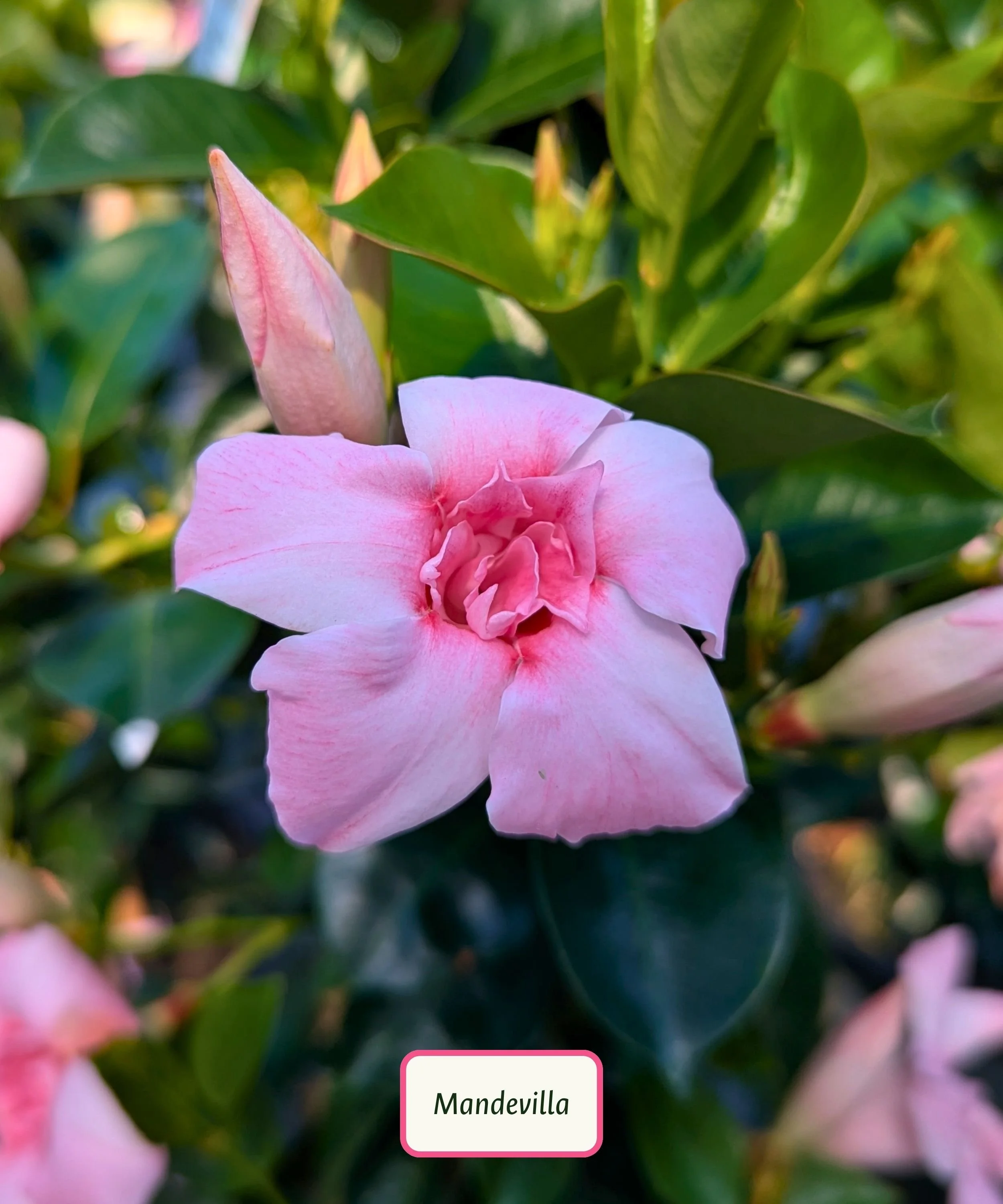 Image 2 of 4
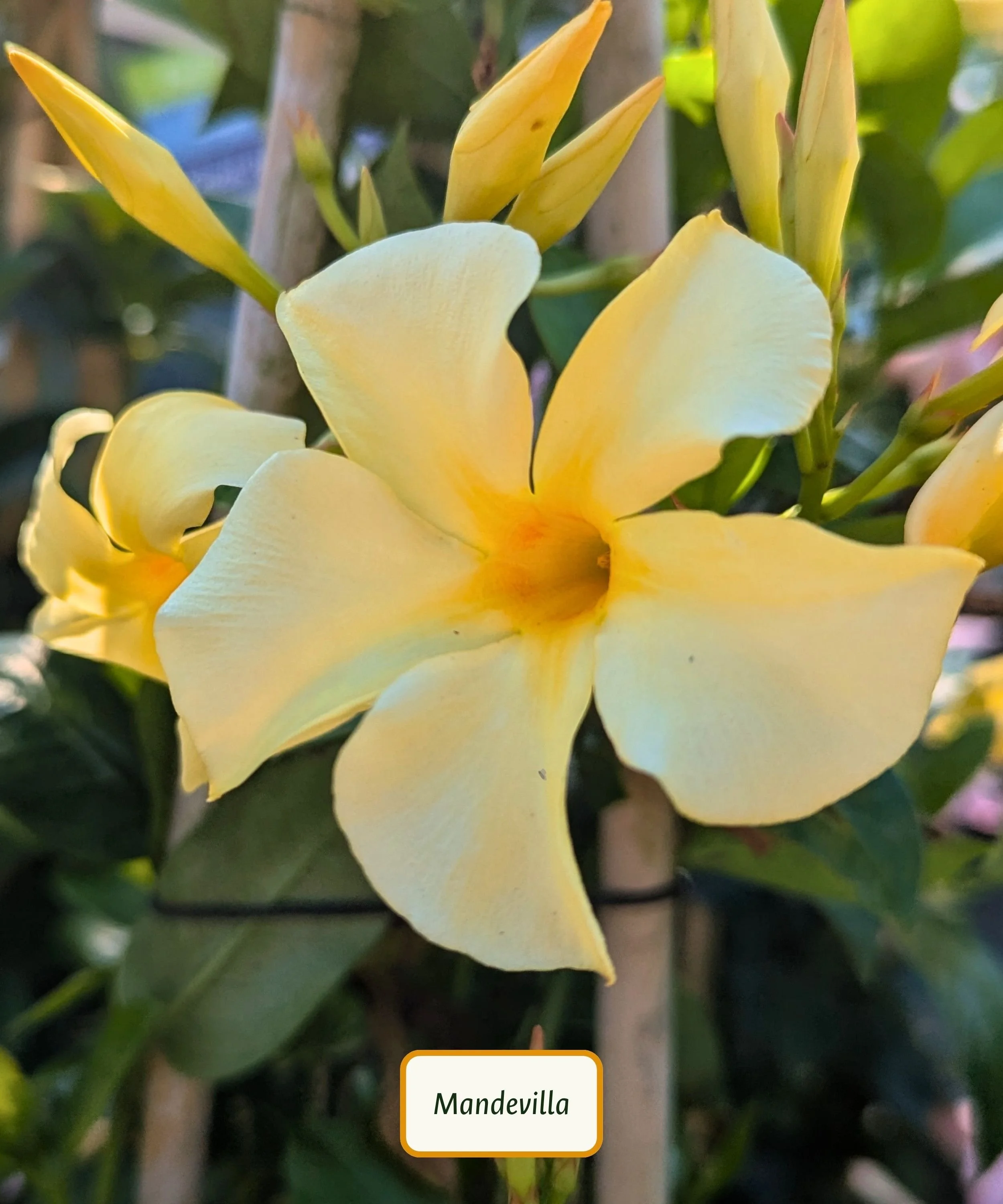 Image 3 of 4
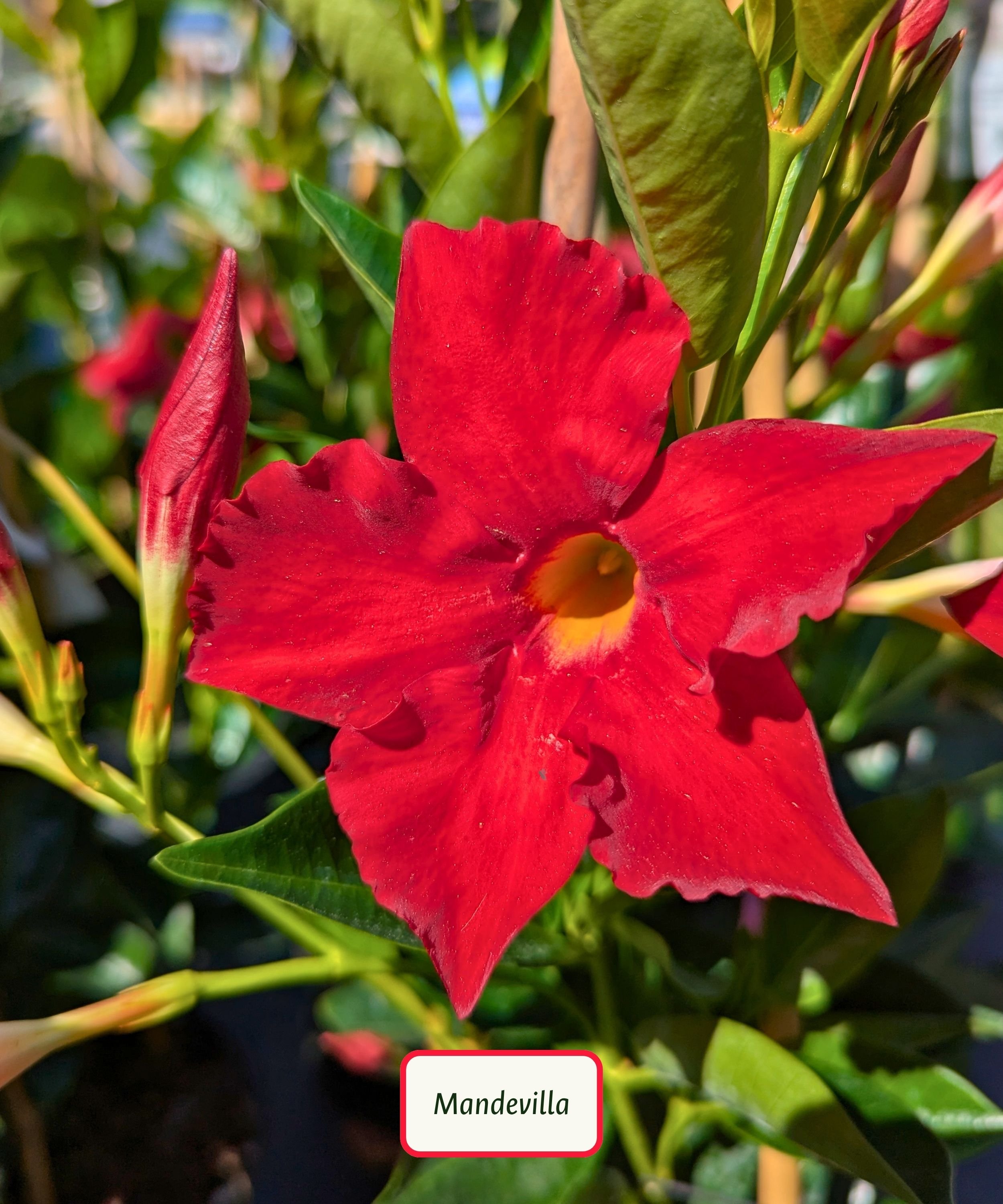 Image 4 of 4
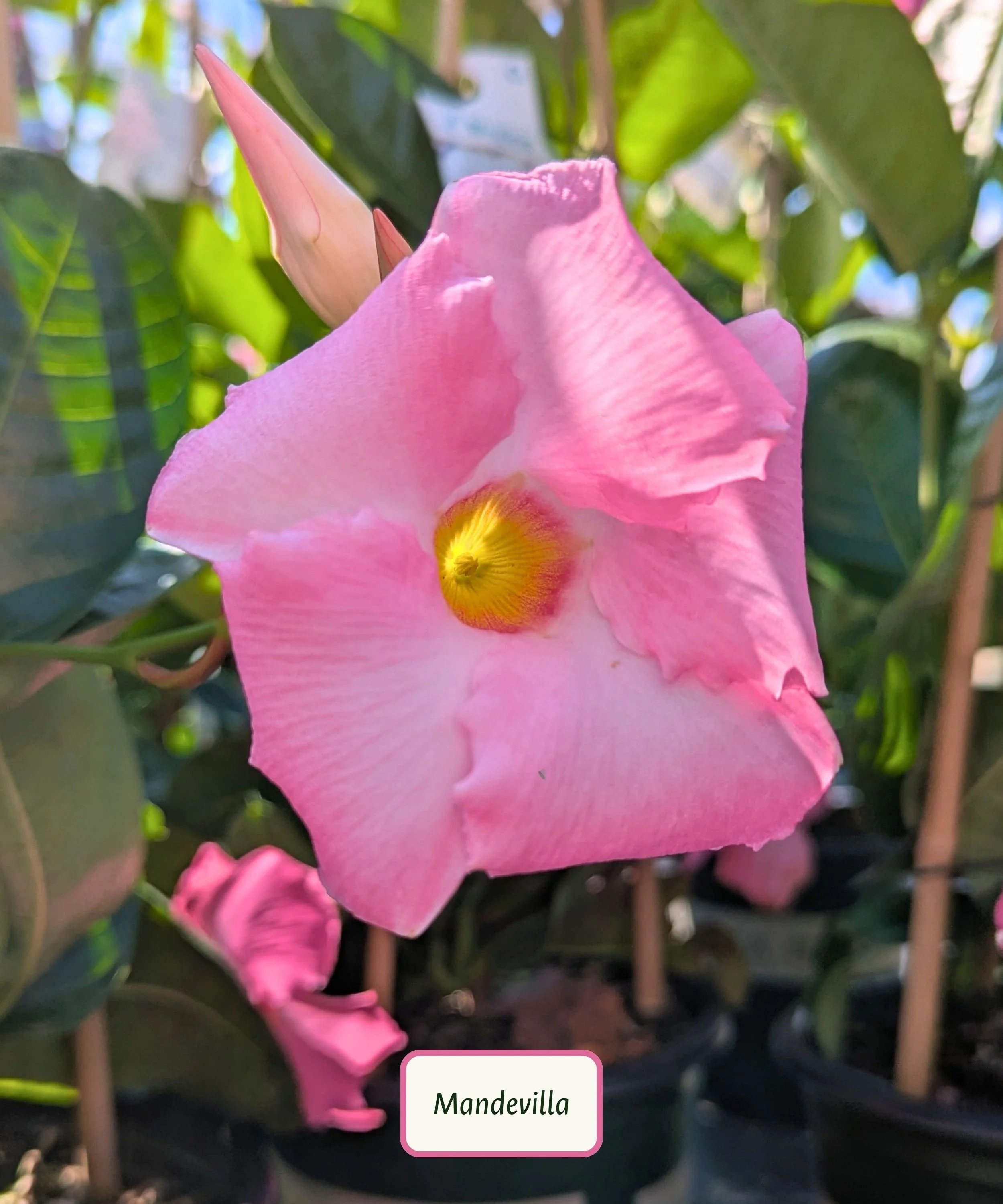
Botanical Name: Mandevilla
Mandevilla is a genus of tropical, perennial shrubs and vines native to the Americas. Their flowers come in a variety of colors such as pink and red, as well as bicolors, white, yellow, orange and bluish purple. It is mildly toxic to pets and humans. Although botanically a Mandevilla, Dipladenia refers to a group of Mandevilla with smaller leaves, smaller flowers, and a bushier habit. There are dozens of varieties, many of which are hybrids that may exhibit intermediate qualities.
Mandevillas are commonly used as annuals for their bright flowers, but can also be houseplants! If grown outdoors, plant in a container as they are cold sensitive; bring indoors in areas with frost and allow soil to dry out during the winter. Prune before placing back outdoors in the spring. It prefers moist, well-drained soil and appreciates afternoon shade in hot humid climates. Provide it with plenty of water in the summer. Indoors they need bright indirect light, average room temperature, and high humidity. Soil should remain moist but never wet. Monitor for mites, aphids, thrips, and whiteflies.
Botanical Name: Mandevilla
Mandevilla is a genus of tropical, perennial shrubs and vines native to the Americas. Their flowers come in a variety of colors such as pink and red, as well as bicolors, white, yellow, orange and bluish purple. It is mildly toxic to pets and humans. Although botanically a Mandevilla, Dipladenia refers to a group of Mandevilla with smaller leaves, smaller flowers, and a bushier habit. There are dozens of varieties, many of which are hybrids that may exhibit intermediate qualities.
Mandevillas are commonly used as annuals for their bright flowers, but can also be houseplants! If grown outdoors, plant in a container as they are cold sensitive; bring indoors in areas with frost and allow soil to dry out during the winter. Prune before placing back outdoors in the spring. It prefers moist, well-drained soil and appreciates afternoon shade in hot humid climates. Provide it with plenty of water in the summer. Indoors they need bright indirect light, average room temperature, and high humidity. Soil should remain moist but never wet. Monitor for mites, aphids, thrips, and whiteflies.