 Image 1 of 2
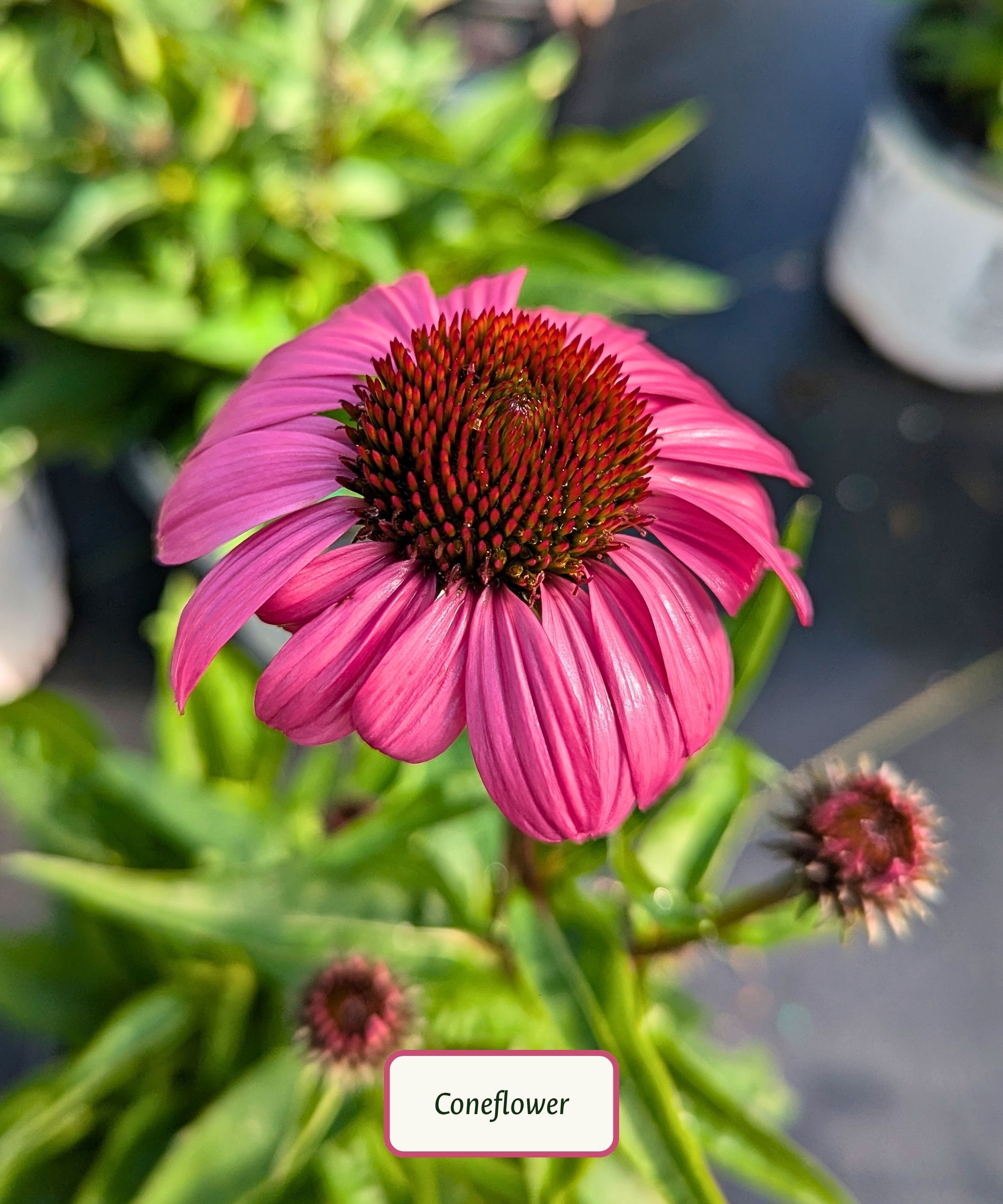 Image 2 of 2
Botanical Name: Echinacea
Cheyenne Spirit
Magnus
PowWow Series
Dozens of other varieties may be available during peak season from mid March to mid May.
Seasons of availability: Spring, occasionally Fall
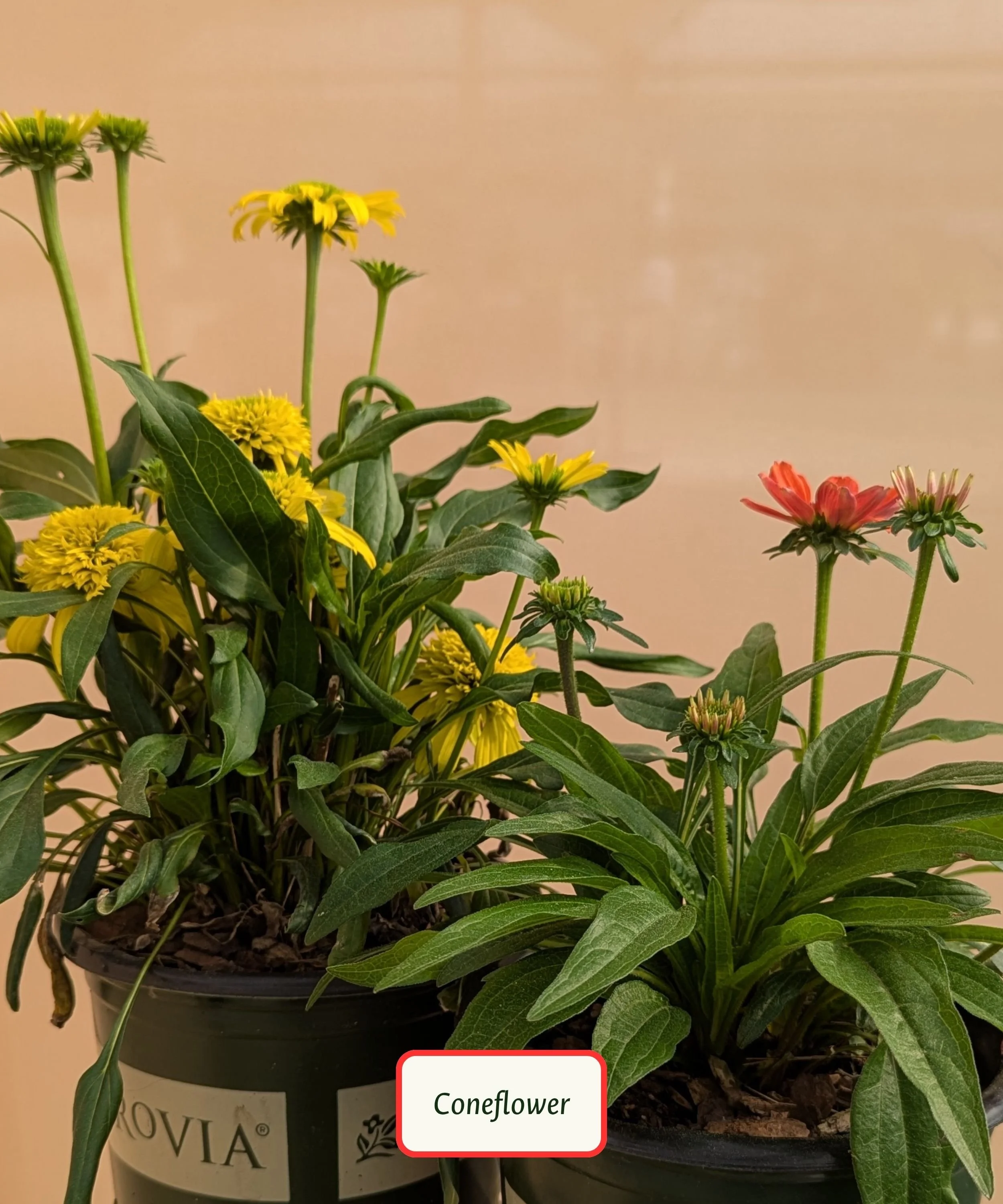
Coneflower is an herbaceous perennial native to the Central and Eastern United States. It grows up to 3 to 4 feet and produces pink to purple flowers that mature in the early summer to mid-fall. Some varieties are selected for yellow, red, orange, and white flowers and may be half the size of the standard purple coneflower.
Coneflower prefers well-draining, moist soil but is adaptable to various types of soil. Wet conditions in the winter can be fatal, so well draining soil is a must. It is drought tolerant once established and is somewhat resistant to deer, heat, and humidity. Coneflower prefers partial sun to full sun and blooms for an extended period of time. This is a popular and long-blooming plant for use as a border or in groupings in a native or pollinator garden, meadow, and naturalized areas. Many cultivars are available for varied sizes and colors. Several pollinators are attracted to the flower, especially butterflies. Leave some of the flower heads on to produce seeds for the birds. Native bees nest in the dead, hollow stems, so gardeners are encouraged to cut back dead stems to 12 to 24 inches and allow them to remain standing until they disintegrate on their own.
Ideal planting seasons: Fall and Spring
Botanical Name: Echinacea
Cheyenne Spirit
Magnus
PowWow Series
Dozens of other varieties may be available during peak season from mid March to mid May.
Seasons of availability: Spring, occasionally Fall
Coneflower is an herbaceous perennial native to the Central and Eastern United States. It grows up to 3 to 4 feet and produces pink to purple flowers that mature in the early summer to mid-fall. Some varieties are selected for yellow, red, orange, and white flowers and may be half the size of the standard purple coneflower.
Coneflower prefers well-draining, moist soil but is adaptable to various types of soil. Wet conditions in the winter can be fatal, so well draining soil is a must. It is drought tolerant once established and is somewhat resistant to deer, heat, and humidity. Coneflower prefers partial sun to full sun and blooms for an extended period of time. This is a popular and long-blooming plant for use as a border or in groupings in a native or pollinator garden, meadow, and naturalized areas. Many cultivars are available for varied sizes and colors. Several pollinators are attracted to the flower, especially butterflies. Leave some of the flower heads on to produce seeds for the birds. Native bees nest in the dead, hollow stems, so gardeners are encouraged to cut back dead stems to 12 to 24 inches and allow them to remain standing until they disintegrate on their own.
Ideal planting seasons: Fall and Spring