 Image 1 of 3
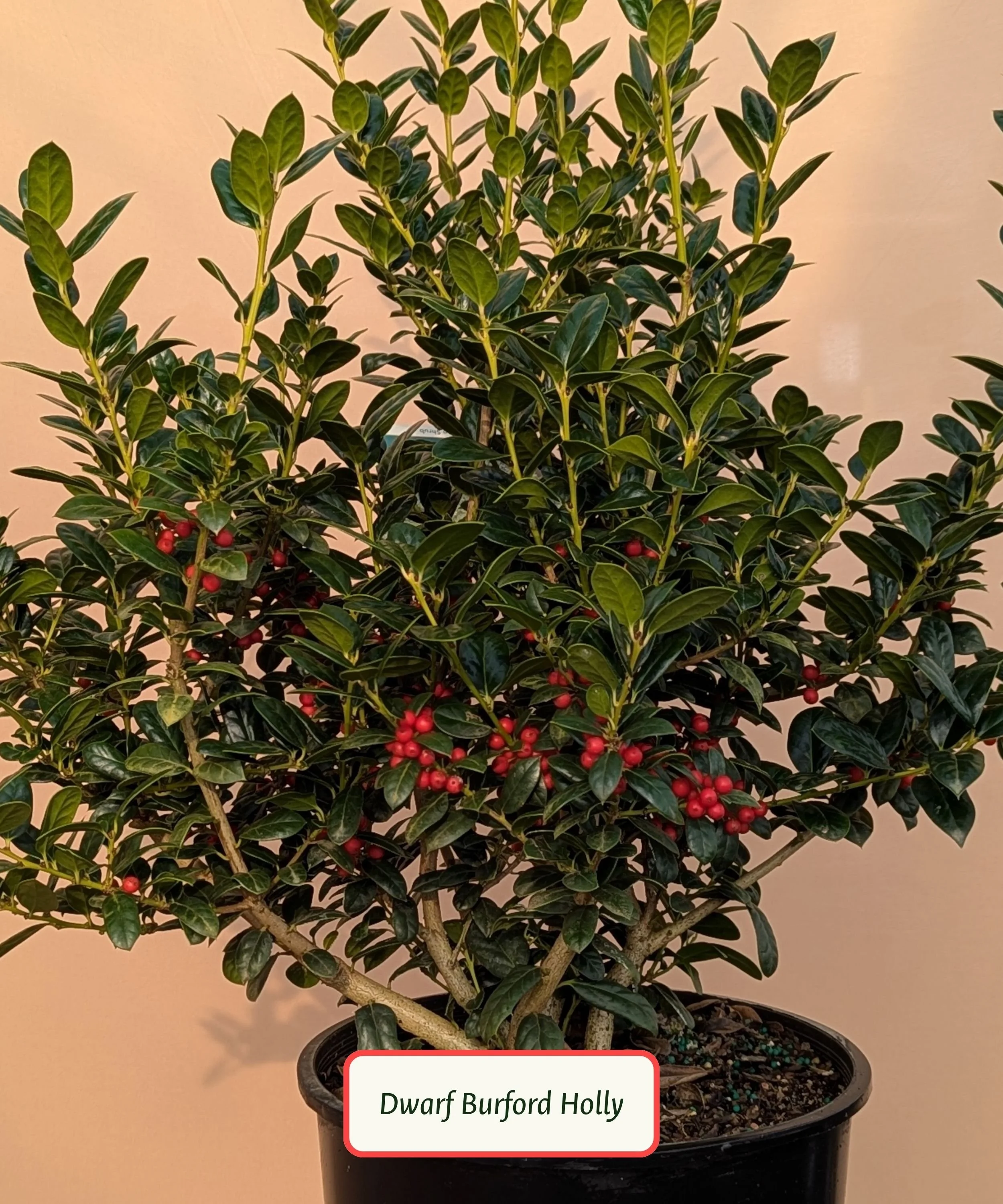 Image 2 of 3
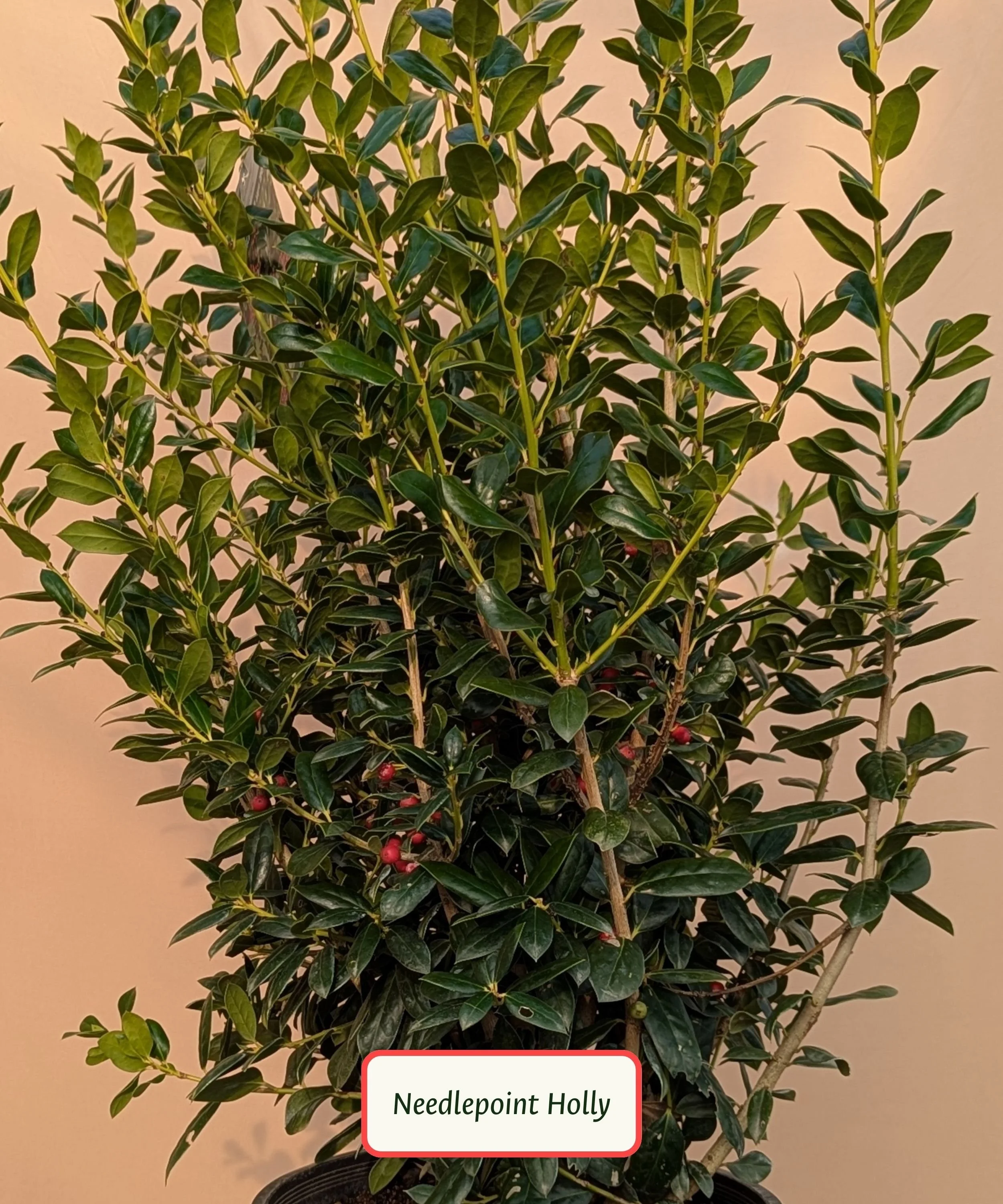 Image 3 of 3
Botanical Name: Ilex cornuta
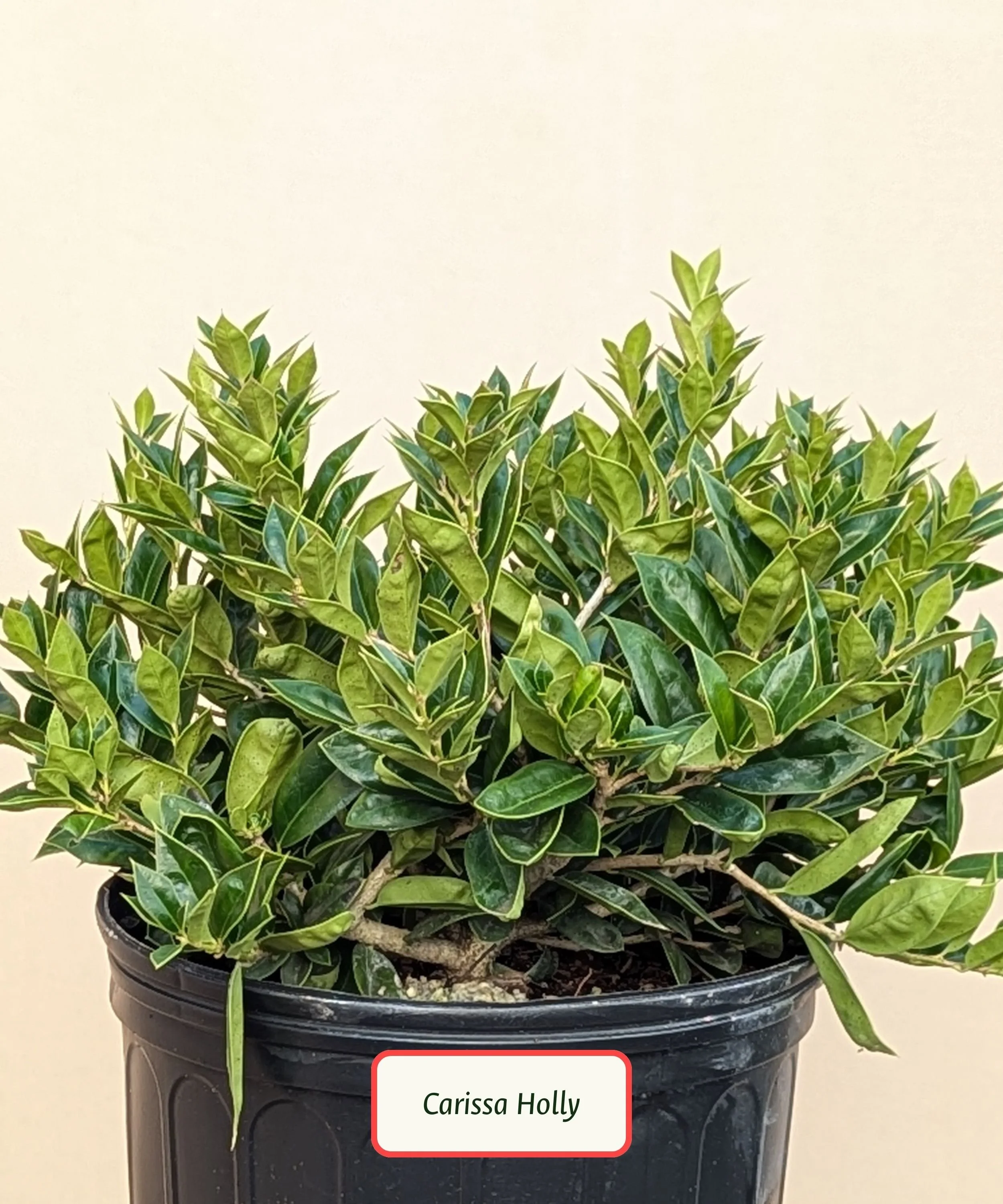
Carissa
Dwarf Burford
Needlepoint
The following varieties may be available for special request: Burford
Seasons of availability: All year.
Chinese Holly is a highly reliable, woody, evergreen shrub or small tree, growing 8-10’ (15’) tall and 25’ wide, often wider than high at maturity. Habit and size can vary greatly with the numerous varieties. Carissa, for example rarely exceeds 3-4 feet tall. The flowers are not very showy, but they are pleasantly scented. The contrast of dark glossy leaves with bright red berries gives a nice winter contrast. Scale, spittlebug, and spider mites can be a nuisance but are rarely serious threats. Deer may browse tender new growth but rarely cause serious damage. Chinese Holly has moderate wildlife value. Chinese Hollies have numerous uses in the landscape depending on variety. The spiny leaves of this Holly make a good choice for a barrier or privacy screen or use as an impenetrable hedge. Chinese Holly can also be planted as a specimen, used in small groups, or planted along a foundation. If the landscape calls for an ironclad, nearly bullet-proof plant, the Chinese Holly is your plant.
Hardy to growing Zones 7-9, Chinese Holly has been known to escape cultivation and naturalize in some states. Avoid high pH soils, as may cause leaf drop or leaf scorch. Prune in the late winter to control its size if needed, but keep in mind that next year's blossoms and berries may be eliminated by severe pruning. Mature plants do not tolerate root disturbance, so it is best to site the plant in its permanent position, preferably one that provides some winter protection for the first year or two. Mulch the prepared soil base to retain moisture and fertilize with a slow-release fertilizer to encourage new growth.
Ideal planting seasons: Fall, Winter, and Spring.
Botanical Name: Ilex cornuta
Carissa
Dwarf Burford
Needlepoint
The following varieties may be available for special request: Burford
Seasons of availability: All year.
Chinese Holly is a highly reliable, woody, evergreen shrub or small tree, growing 8-10’ (15’) tall and 25’ wide, often wider than high at maturity. Habit and size can vary greatly with the numerous varieties. Carissa, for example rarely exceeds 3-4 feet tall. The flowers are not very showy, but they are pleasantly scented. The contrast of dark glossy leaves with bright red berries gives a nice winter contrast. Scale, spittlebug, and spider mites can be a nuisance but are rarely serious threats. Deer may browse tender new growth but rarely cause serious damage. Chinese Holly has moderate wildlife value. Chinese Hollies have numerous uses in the landscape depending on variety. The spiny leaves of this Holly make a good choice for a barrier or privacy screen or use as an impenetrable hedge. Chinese Holly can also be planted as a specimen, used in small groups, or planted along a foundation. If the landscape calls for an ironclad, nearly bullet-proof plant, the Chinese Holly is your plant.
Hardy to growing Zones 7-9, Chinese Holly has been known to escape cultivation and naturalize in some states. Avoid high pH soils, as may cause leaf drop or leaf scorch. Prune in the late winter to control its size if needed, but keep in mind that next year's blossoms and berries may be eliminated by severe pruning. Mature plants do not tolerate root disturbance, so it is best to site the plant in its permanent position, preferably one that provides some winter protection for the first year or two. Mulch the prepared soil base to retain moisture and fertilize with a slow-release fertilizer to encourage new growth.
Ideal planting seasons: Fall, Winter, and Spring.