 Image 1 of 2
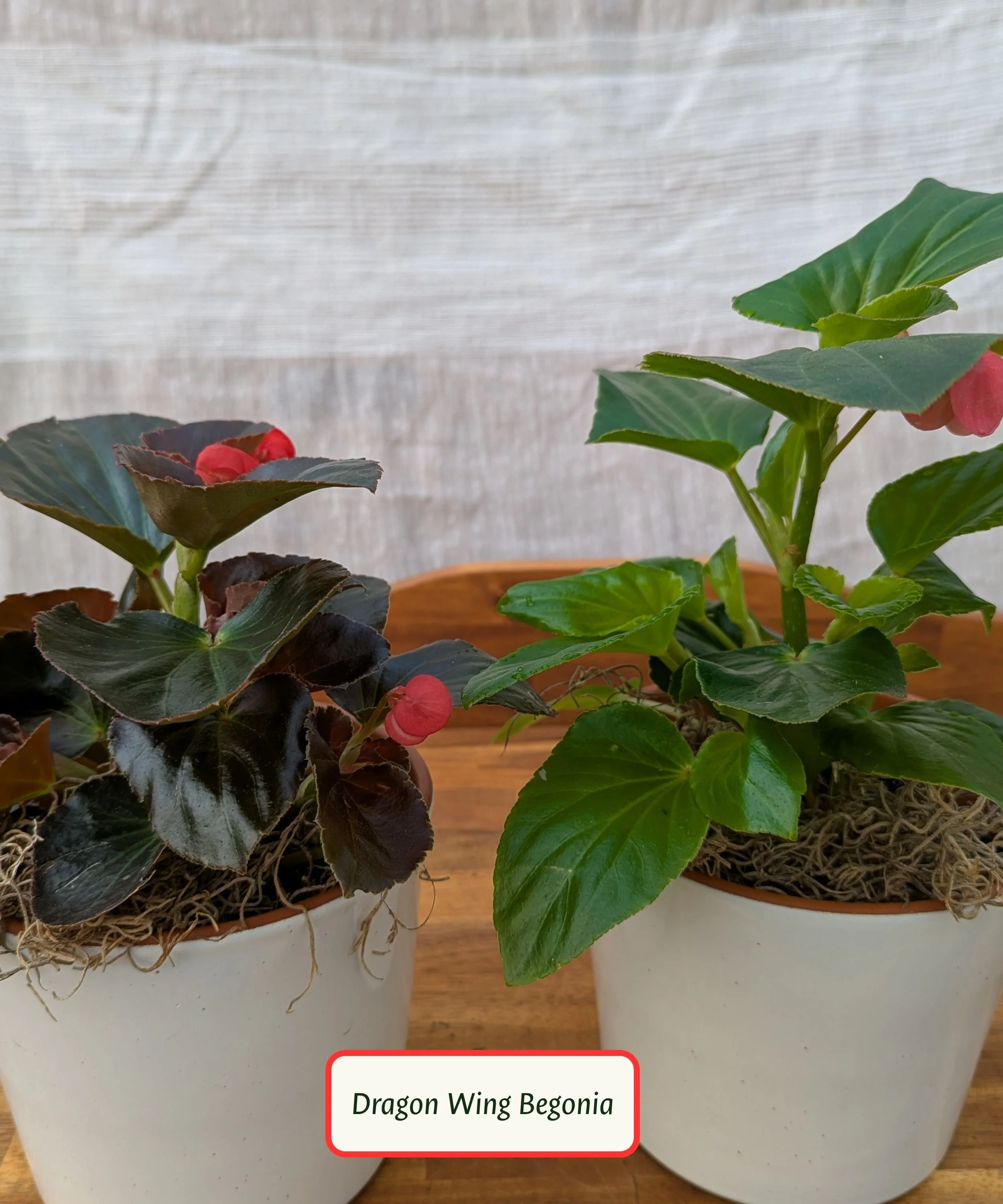 Image 2 of 2
Botanical Name: Begonia
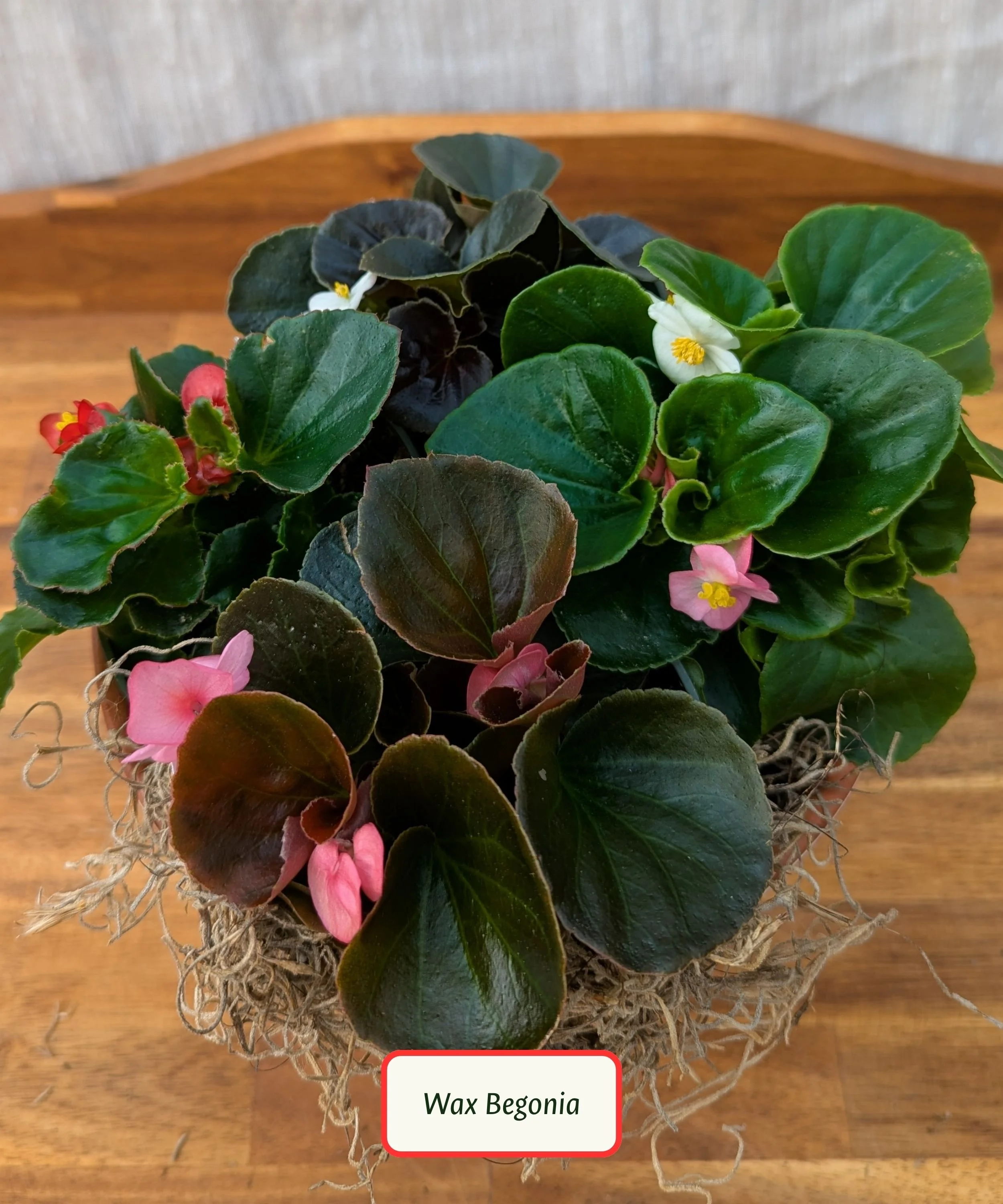
Wax
Dragon Wing
Annual Begonias are often used as an annual bedding plant or as a tender herbaceous perennial if protected from freezing temperatures. Most are native to South America. They are compact and mounded with succulent-like leaves ranging from green to bronze. Generally requiring little maintenance, Wax Begonias mature in size to around 6 to 12 inches high with a similar spread. Dragon Wing types can reach 24 inches or more.
Once Annual Begonias are established, they can adapt to a wide range of light exposure, though they do require moderately humus-rich, well-drained moist soils. Bronze-leaved varieties tend to do better in sunnier locations. Mulch well in the summer to protect roots, and water well. This plant resists browsing by deer and rabbits and is tolerant of hot summer temperatures, some mild drought and heavy shade. Use wax begonia in patio containers, in window boxes, planted along walkways or woodland edges or in shady locations. These plants are also a good addition to pollinator and drought-resistant gardens.
Botanical Name: Begonia
Wax
Dragon Wing
Annual Begonias are often used as an annual bedding plant or as a tender herbaceous perennial if protected from freezing temperatures. Most are native to South America. They are compact and mounded with succulent-like leaves ranging from green to bronze. Generally requiring little maintenance, Wax Begonias mature in size to around 6 to 12 inches high with a similar spread. Dragon Wing types can reach 24 inches or more.
Once Annual Begonias are established, they can adapt to a wide range of light exposure, though they do require moderately humus-rich, well-drained moist soils. Bronze-leaved varieties tend to do better in sunnier locations. Mulch well in the summer to protect roots, and water well. This plant resists browsing by deer and rabbits and is tolerant of hot summer temperatures, some mild drought and heavy shade. Use wax begonia in patio containers, in window boxes, planted along walkways or woodland edges or in shady locations. These plants are also a good addition to pollinator and drought-resistant gardens.