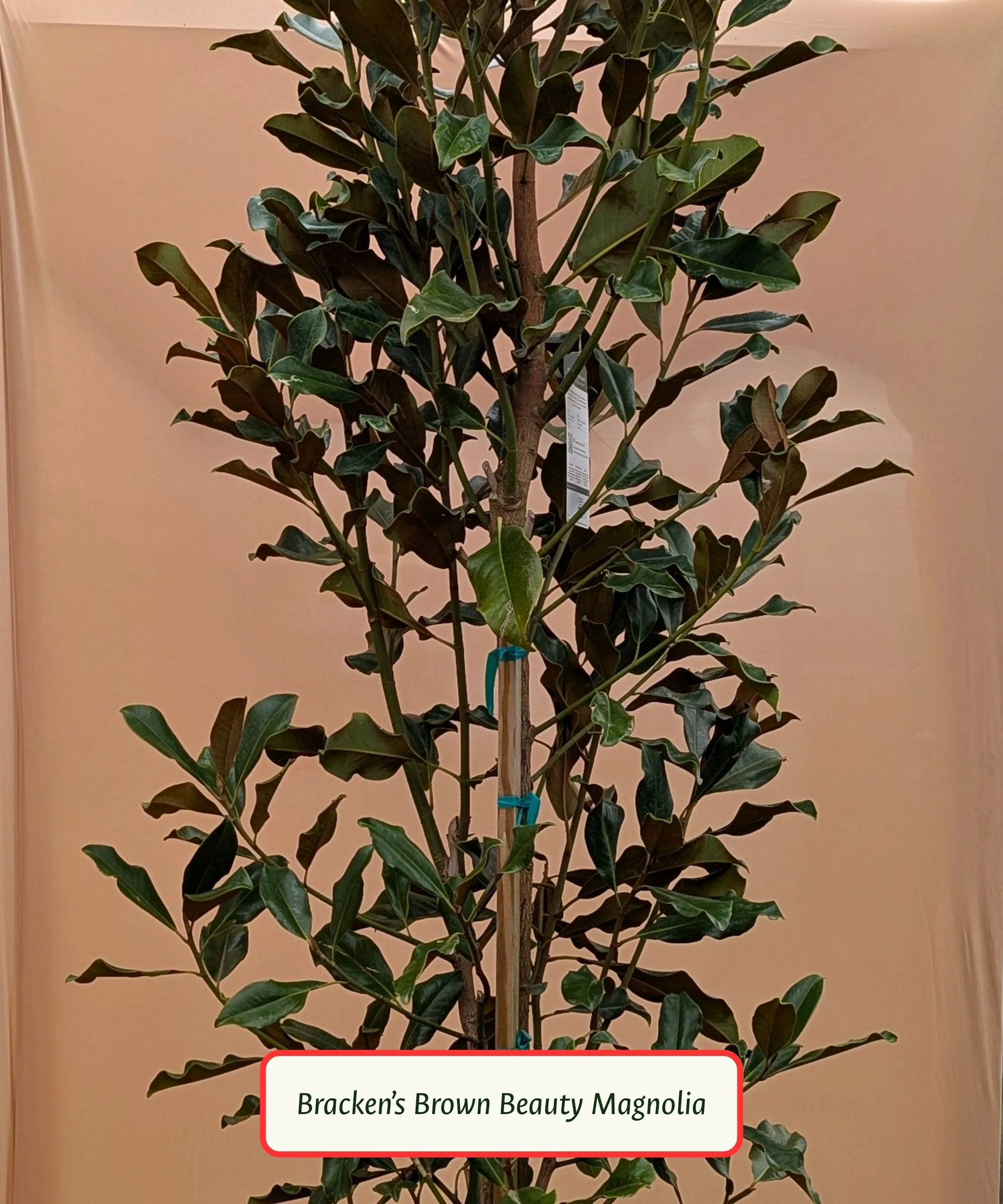
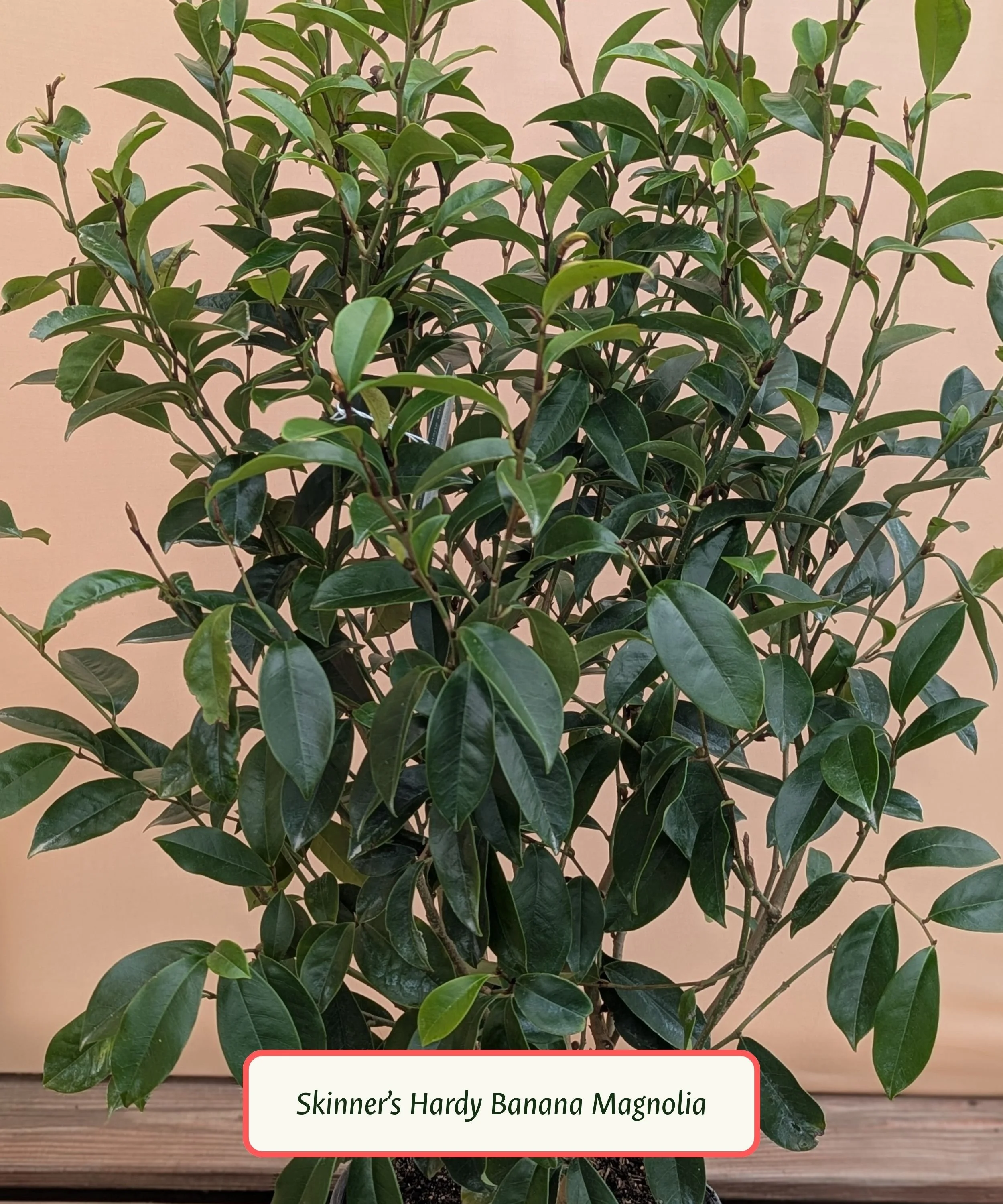
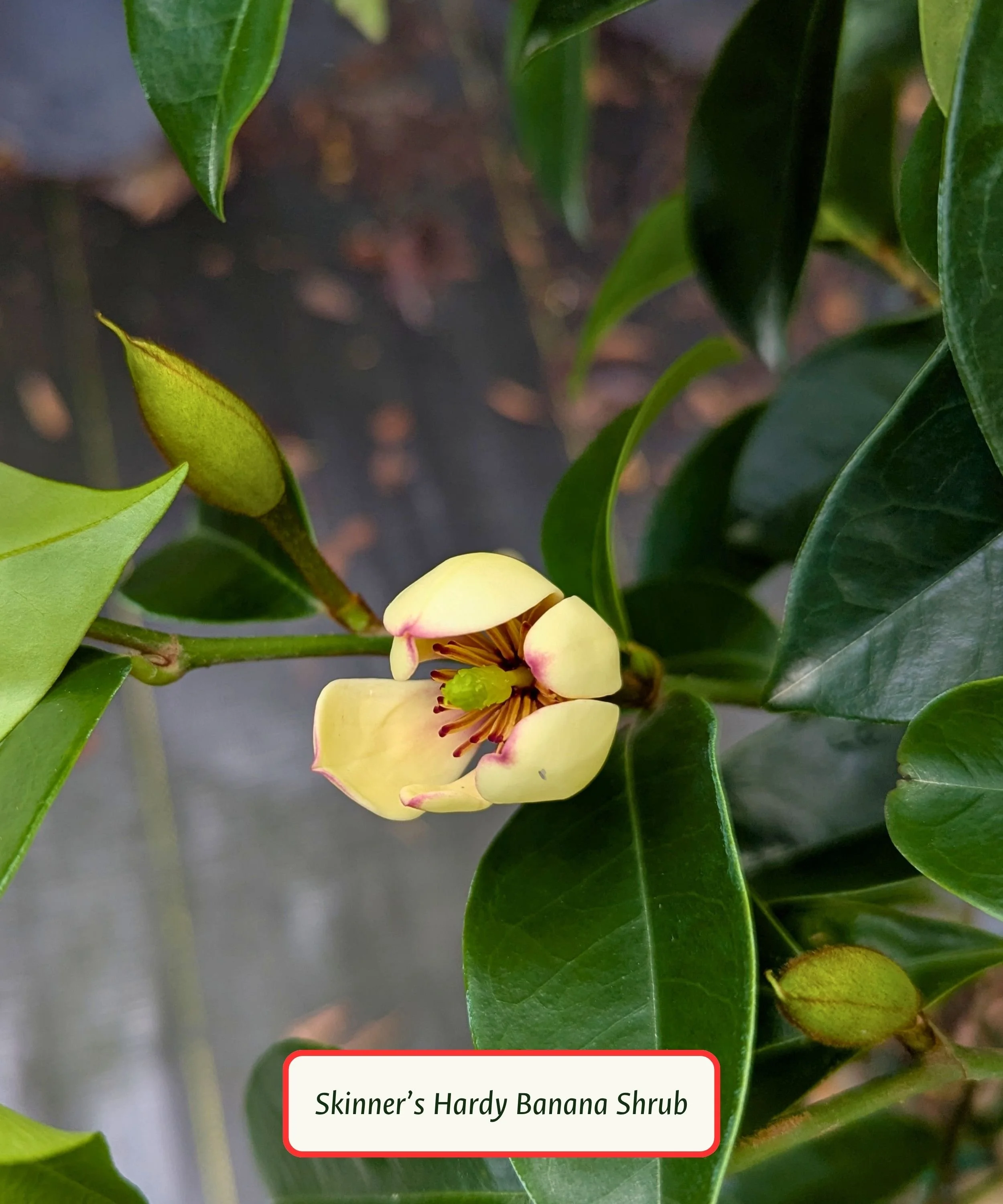
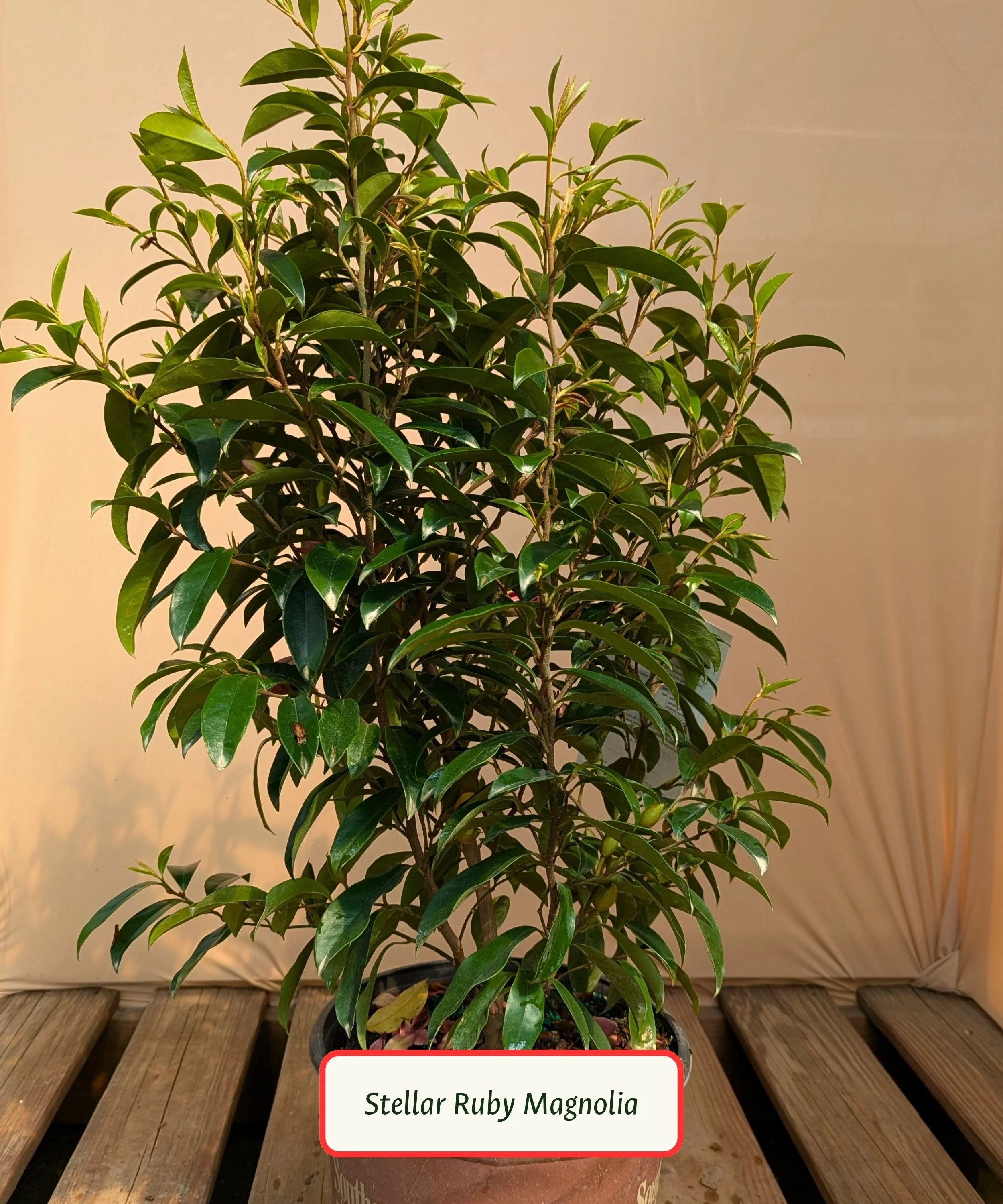
Georgia native, shade loving, good deer resistance, braodleaf evergreen that requiers excellent drainage.
Botanical Name: Illicum
Varieties we carry:
Woodland Ruby
Scorpio
Orion
BananaAppeal
Florida Sunshine
Parviflorum
Pink Frost
The following varieties may be available for special request: floridanum, Miss Scarlet
Seasons of availability: All year.
Landscape Value:
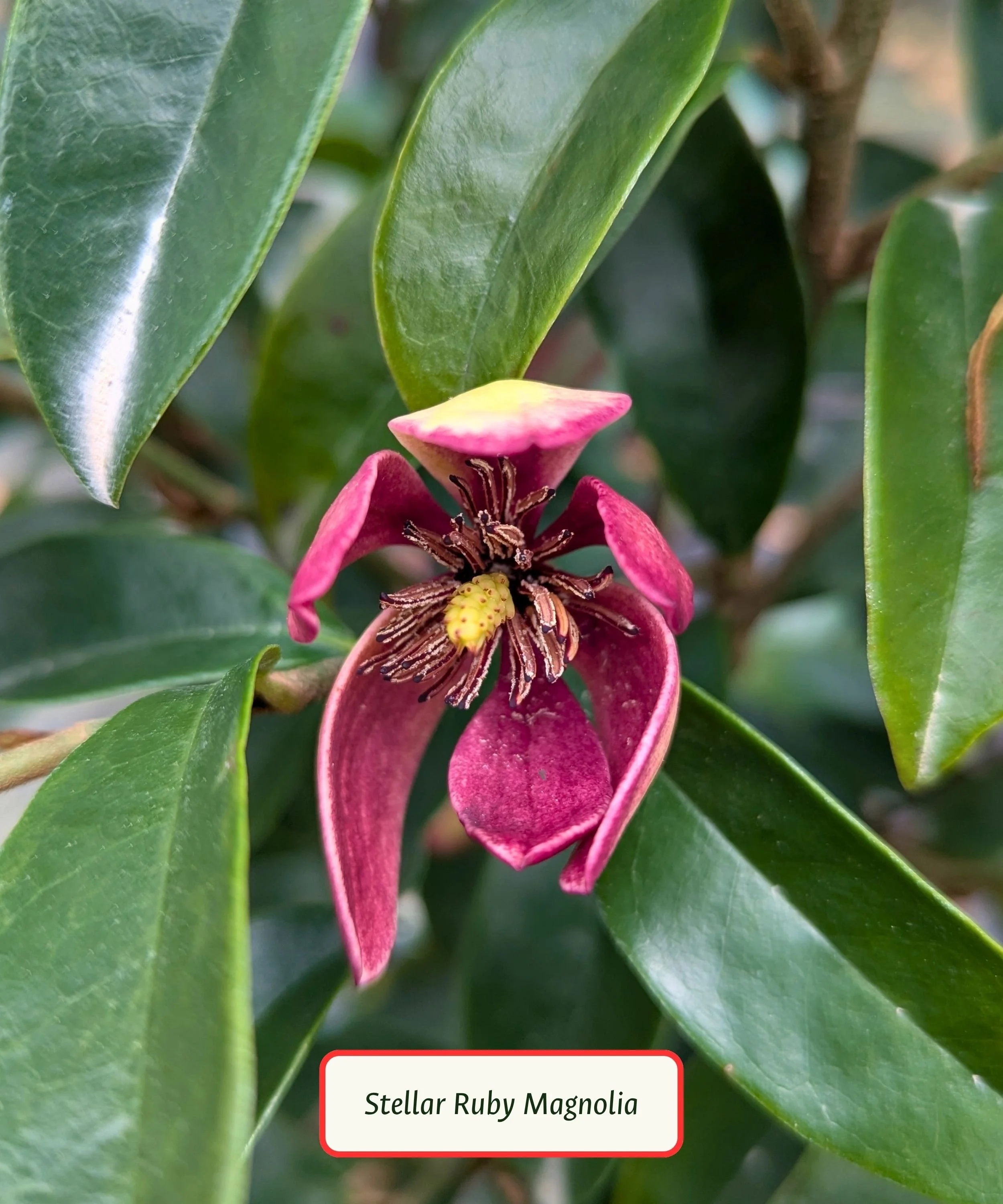
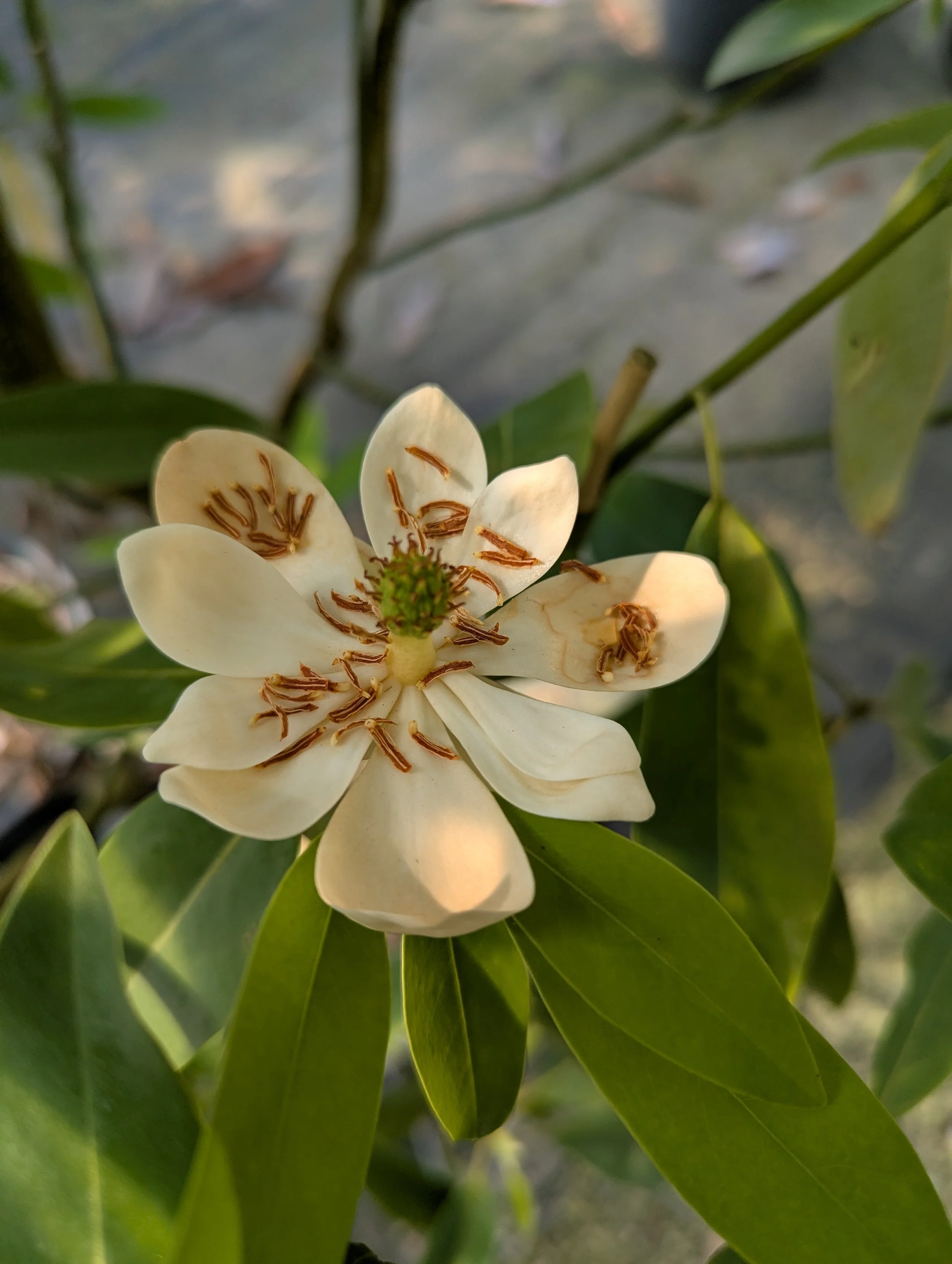
This woody evergreen shrub or small tree is native to the Southeastern United States. There are also hybrids native to North America, and species native to Asia. With moderate growth rate, Anise is typically 6-10’ high and almost as wide. Some varieties are more compact. The habitat is upright with large oval foliage that has a pleasant fragrance when bruised. Showing good deer resistance with no serious insect or disease issues. Phytophthora root rot is the biggest concern. Use as a specimen, a hedge, or along ponds and streams in a naturalized or woodland garden. All Anise species and cultivars have varying levels of toxicity. Due to its toxicity, Anise is primarily used as shelter for wildlife but it attracts pollinators with its star shaped flowers.
Plant Care:
Most Anise prefer part shade to shade, but some varieties will tolerate more sun if given enough moisture. They tolerate loam or sandy soils that are moist with a neutral or acid pH. Anise requires excellent drainage and may stolonize. Anise is hardy from Zones 6-10. Heavy pruning should be done in late Winter to early Spring, and light pruning can be done in early summer for shape. Mulch the prepared soil base to retain moisture and fertilize with a slow-release fertilizer to encourage new growth.
Ideal planting seasons: Fall, Winter, and Spring.
Georgia native, shade loving, good deer resistance, braodleaf evergreen that requiers excellent drainage.
Botanical Name: Illicum
Varieties we carry:
Woodland Ruby
Scorpio
Orion
BananaAppeal
Florida Sunshine
Parviflorum
Pink Frost
The following varieties may be available for special request: floridanum, Miss Scarlet
Seasons of availability: All year.
Landscape Value:
This woody evergreen shrub or small tree is native to the Southeastern United States. There are also hybrids native to North America, and species native to Asia. With moderate growth rate, Anise is typically 6-10’ high and almost as wide. Some varieties are more compact. The habitat is upright with large oval foliage that has a pleasant fragrance when bruised. Showing good deer resistance with no serious insect or disease issues. Phytophthora root rot is the biggest concern. Use as a specimen, a hedge, or along ponds and streams in a naturalized or woodland garden. All Anise species and cultivars have varying levels of toxicity. Due to its toxicity, Anise is primarily used as shelter for wildlife but it attracts pollinators with its star shaped flowers.
Plant Care:
Most Anise prefer part shade to shade, but some varieties will tolerate more sun if given enough moisture. They tolerate loam or sandy soils that are moist with a neutral or acid pH. Anise requires excellent drainage and may stolonize. Anise is hardy from Zones 6-10. Heavy pruning should be done in late Winter to early Spring, and light pruning can be done in early summer for shape. Mulch the prepared soil base to retain moisture and fertilize with a slow-release fertilizer to encourage new growth.
Ideal planting seasons: Fall, Winter, and Spring.


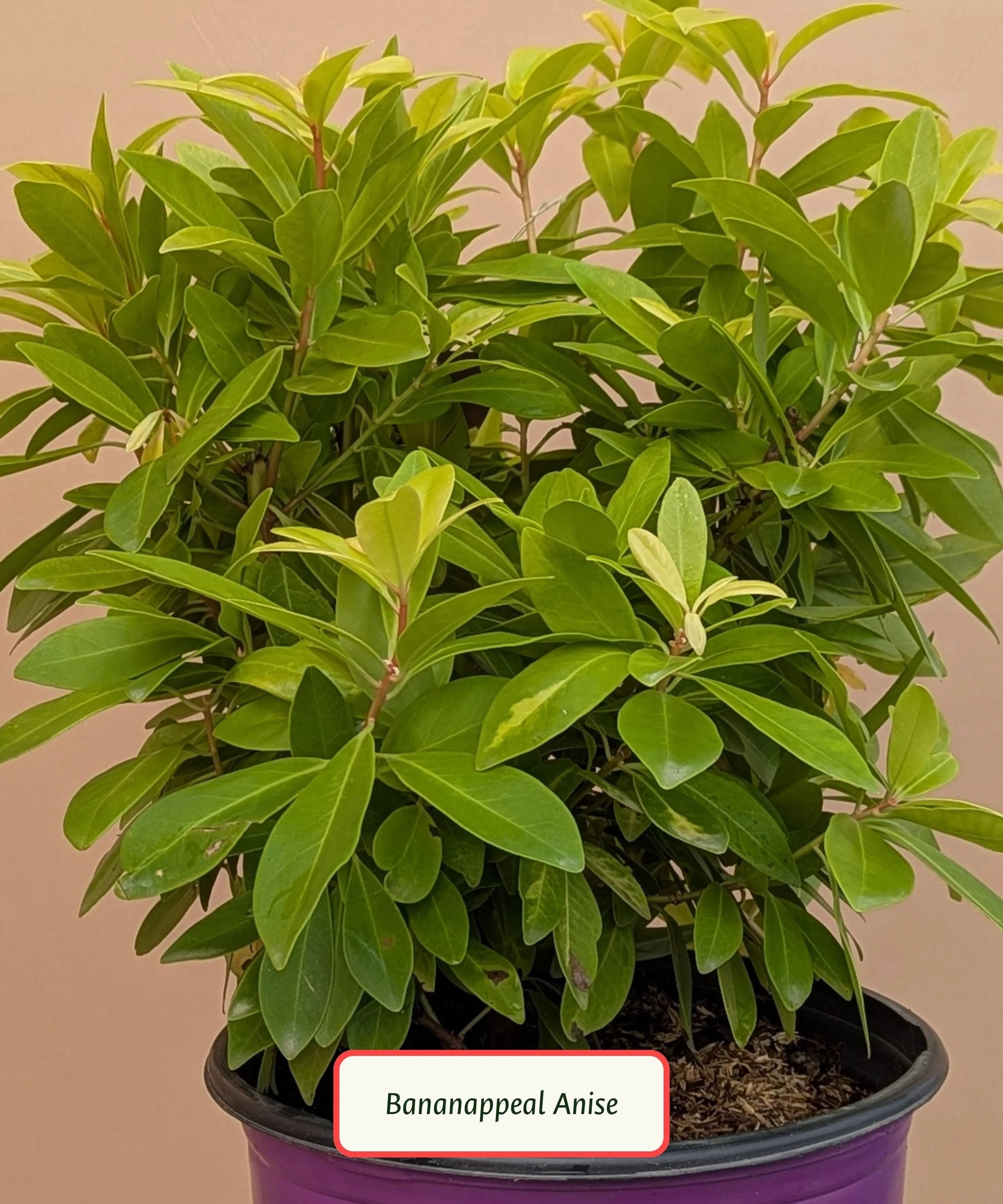 Image 1 of 6
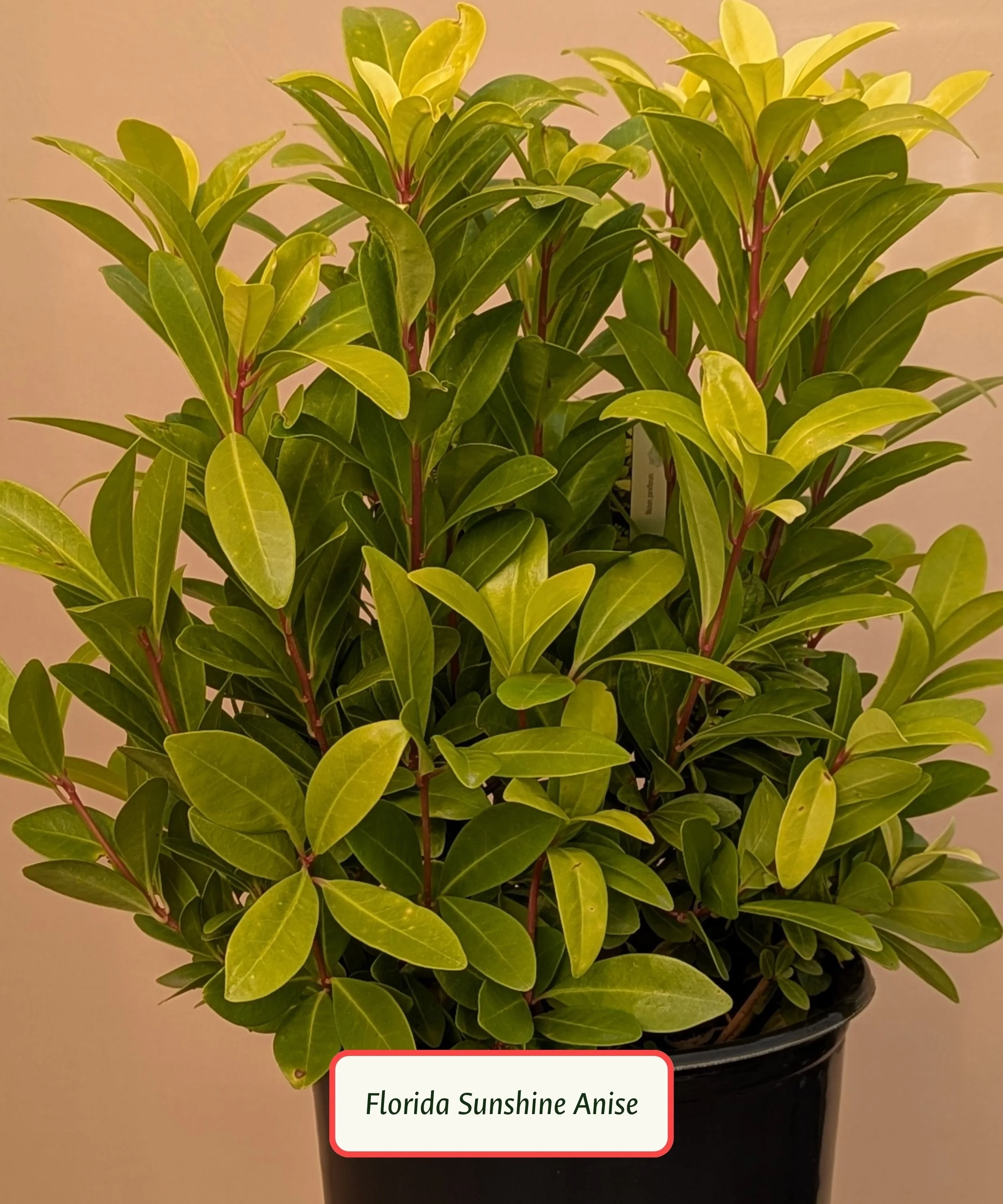 Image 2 of 6
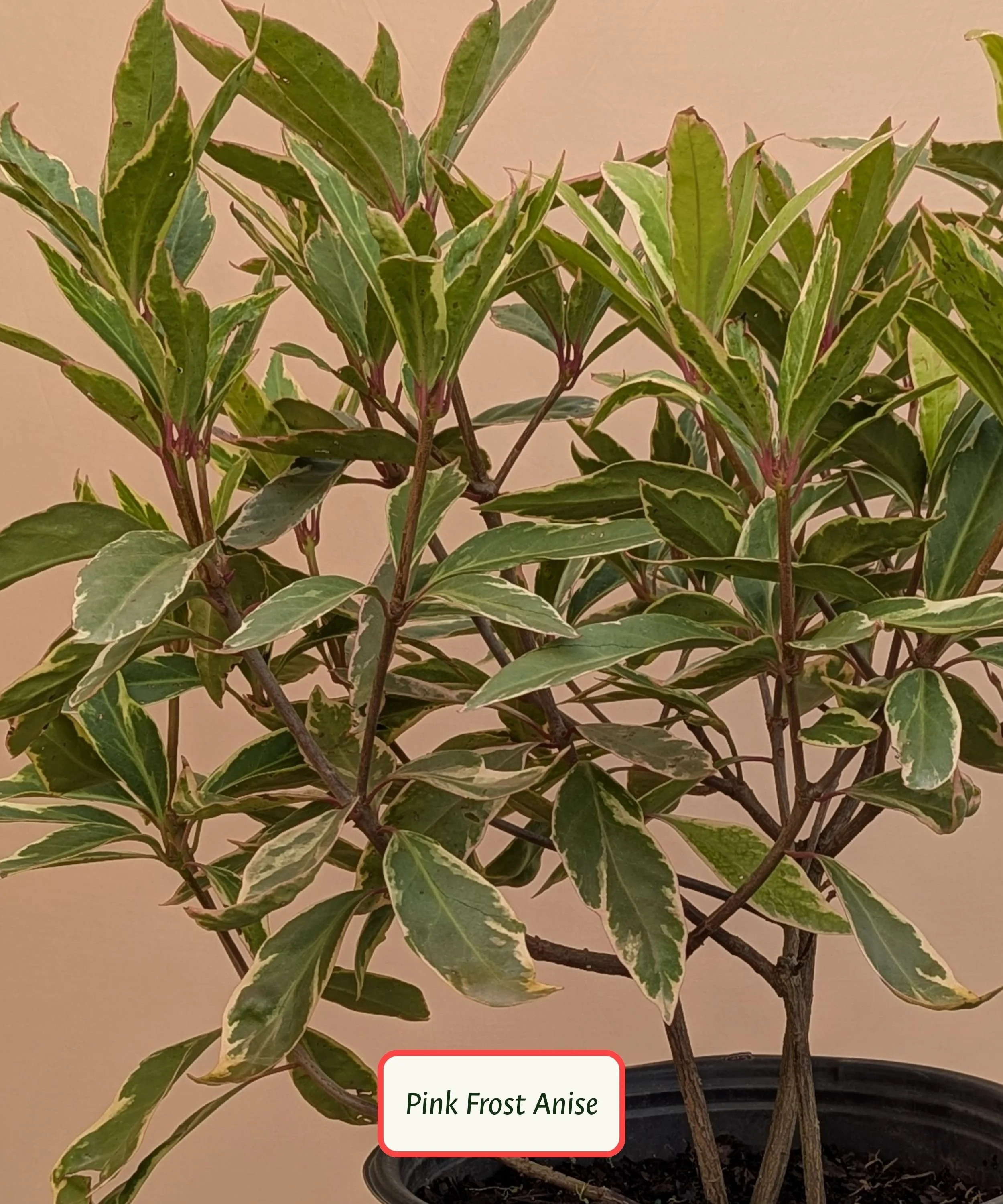 Image 3 of 6
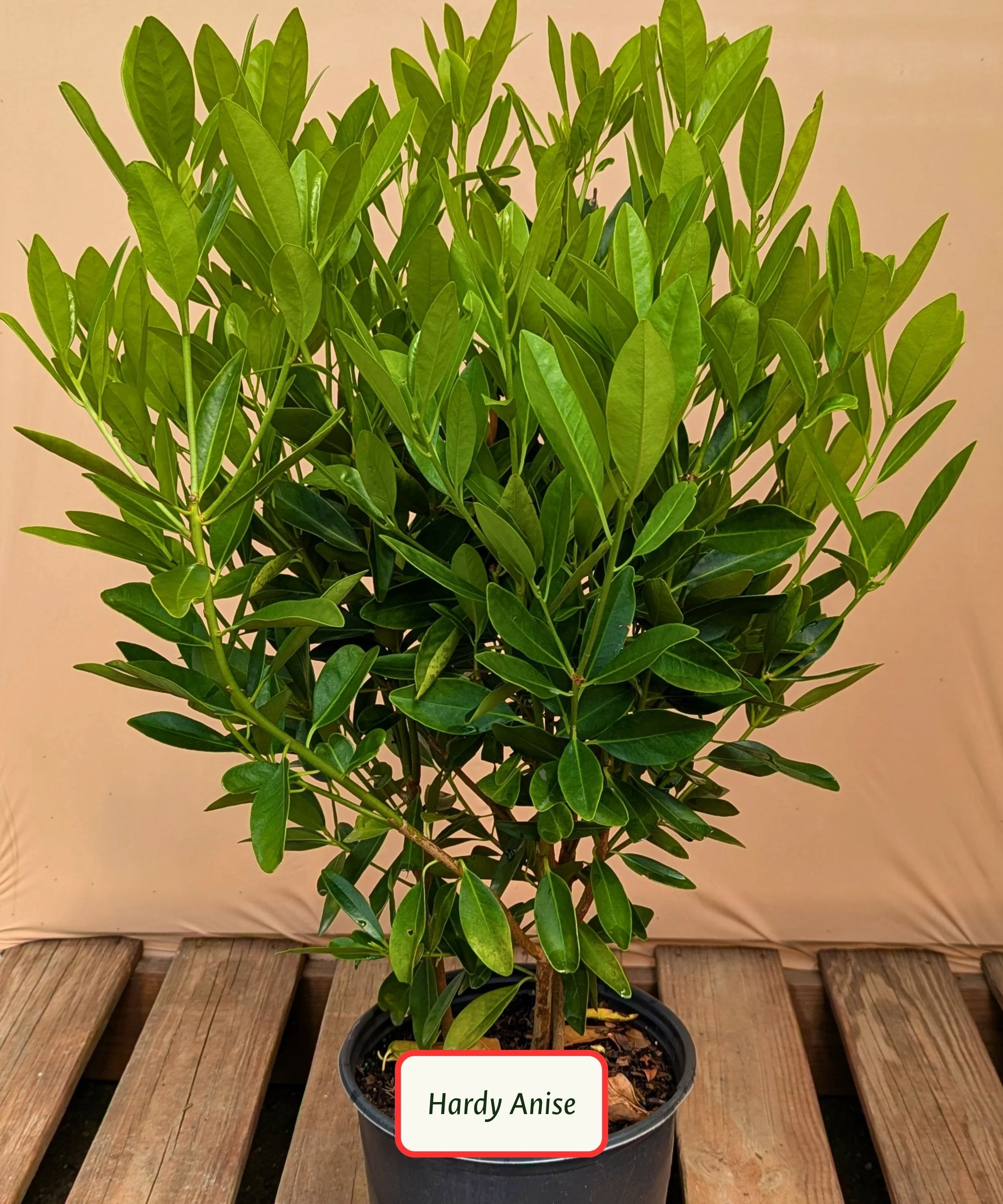 Image 4 of 6
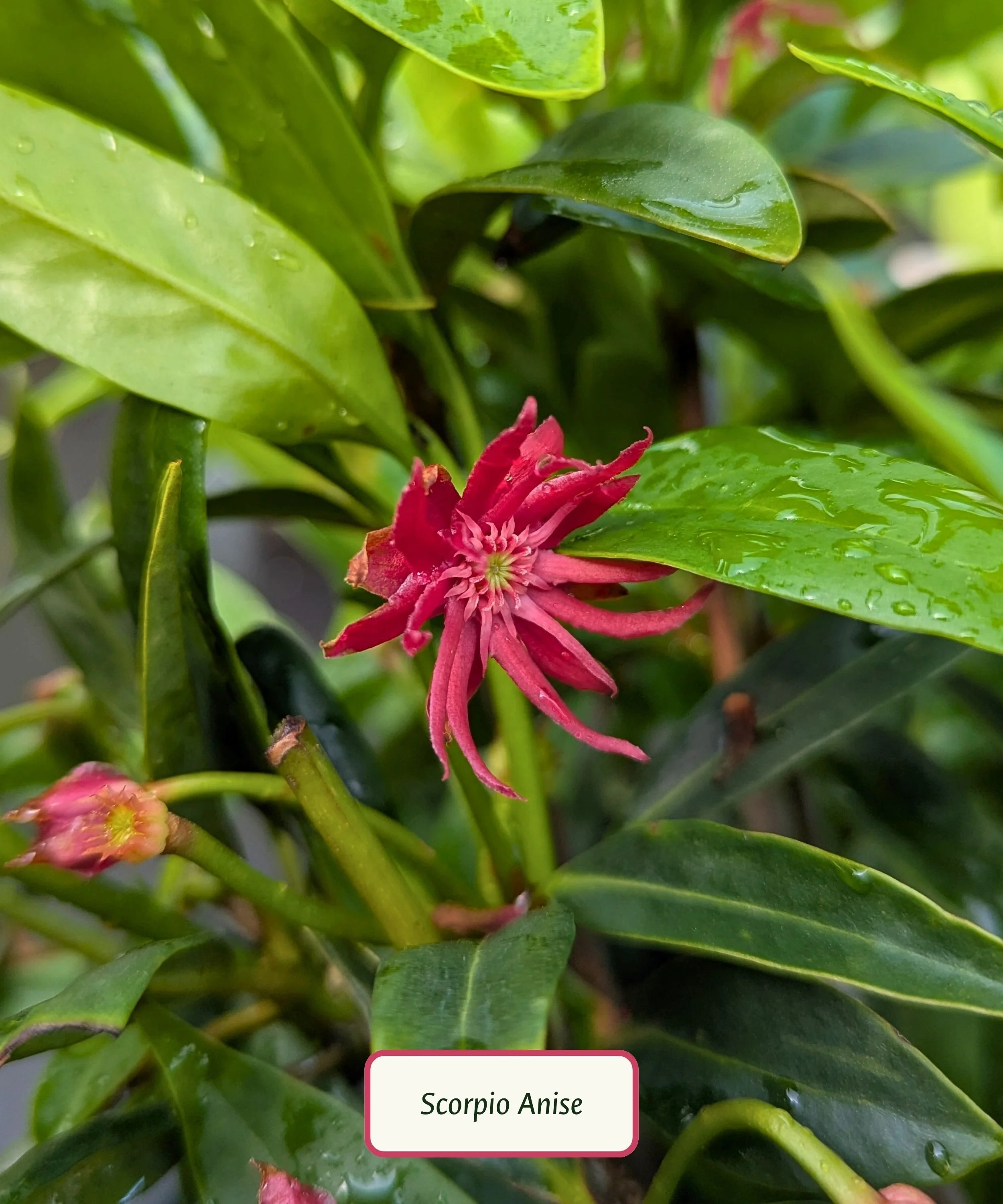 Image 5 of 6
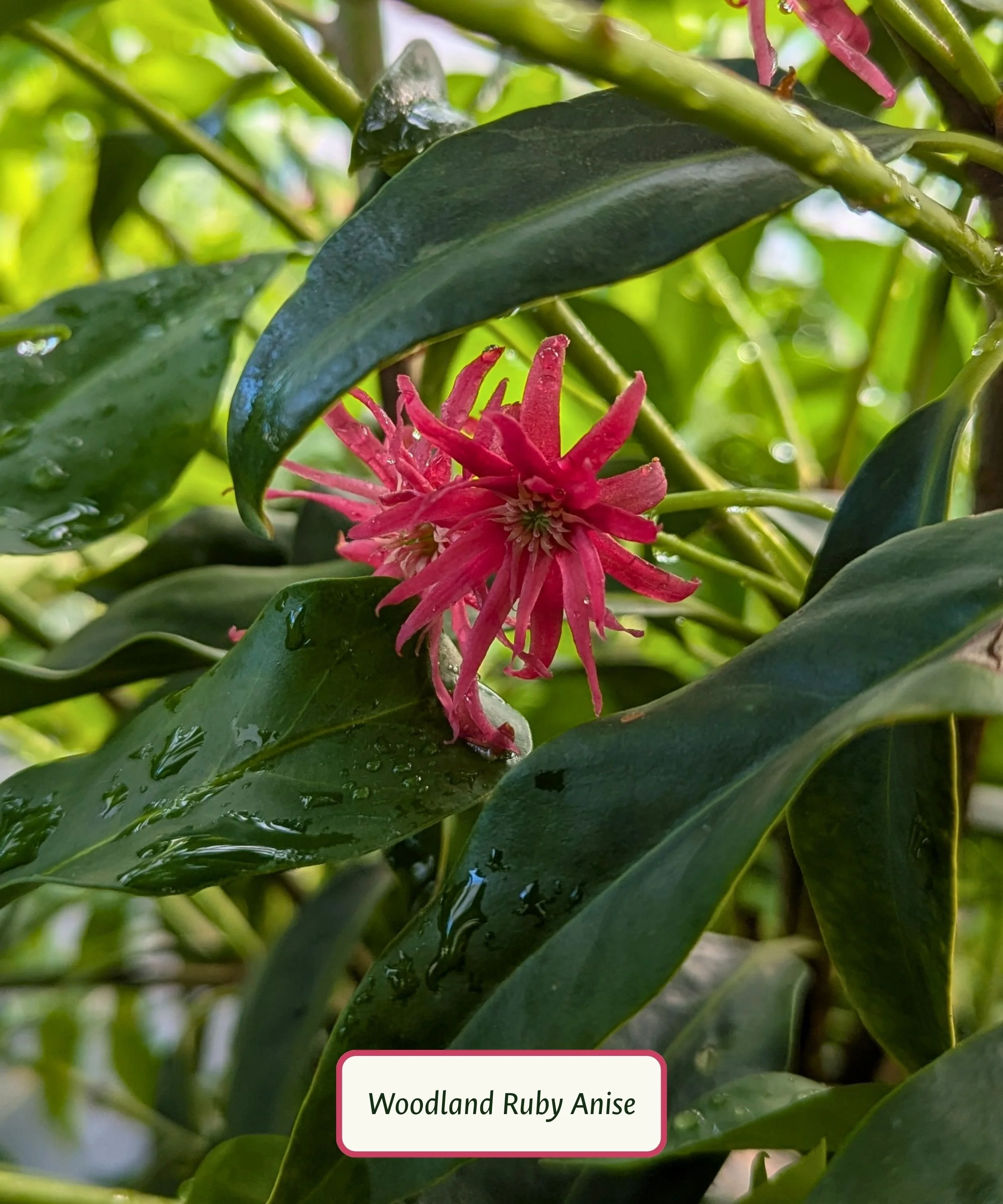 Image 6 of 6