 Image 1 of 5
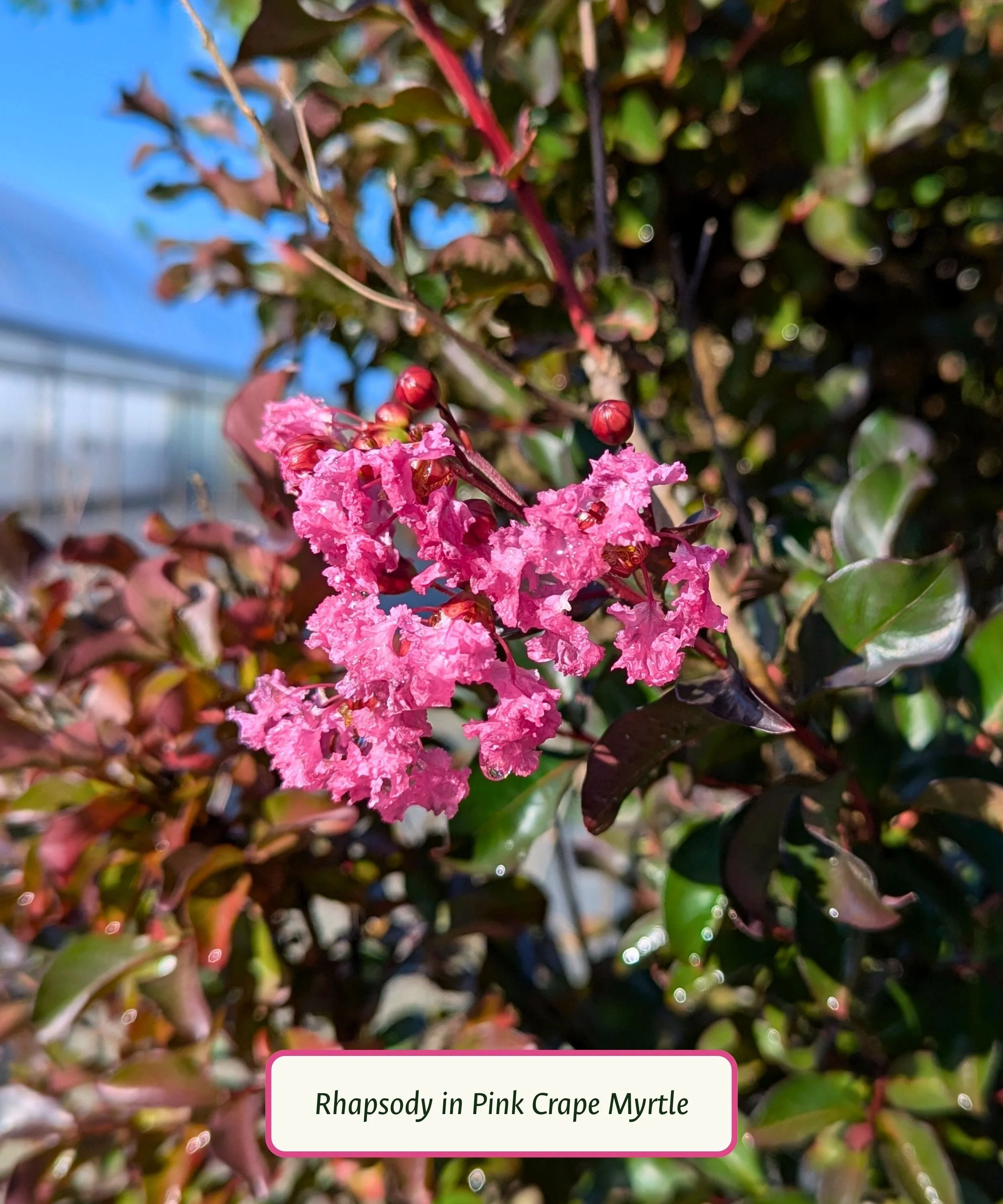 Image 2 of 5
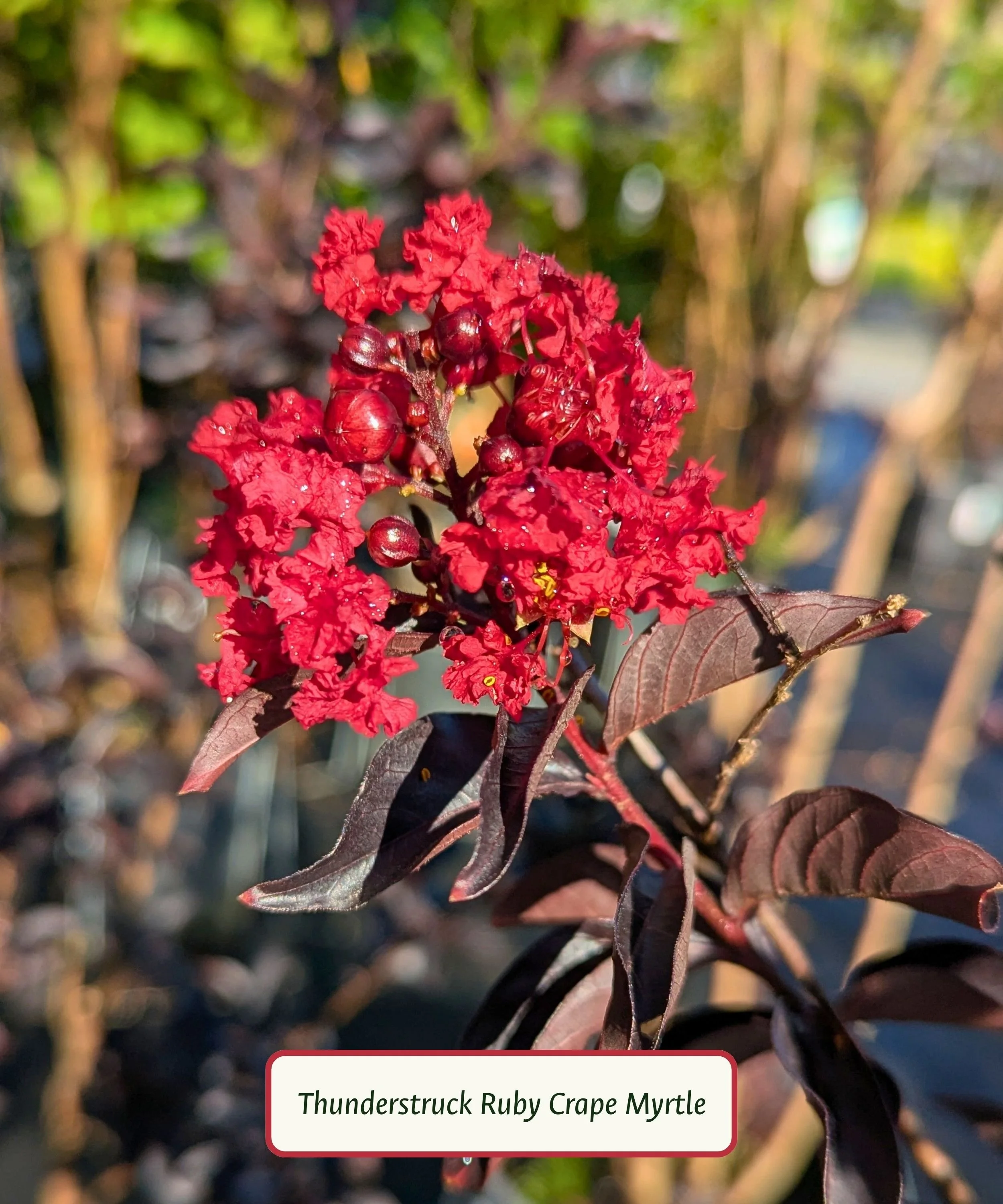 Image 3 of 5
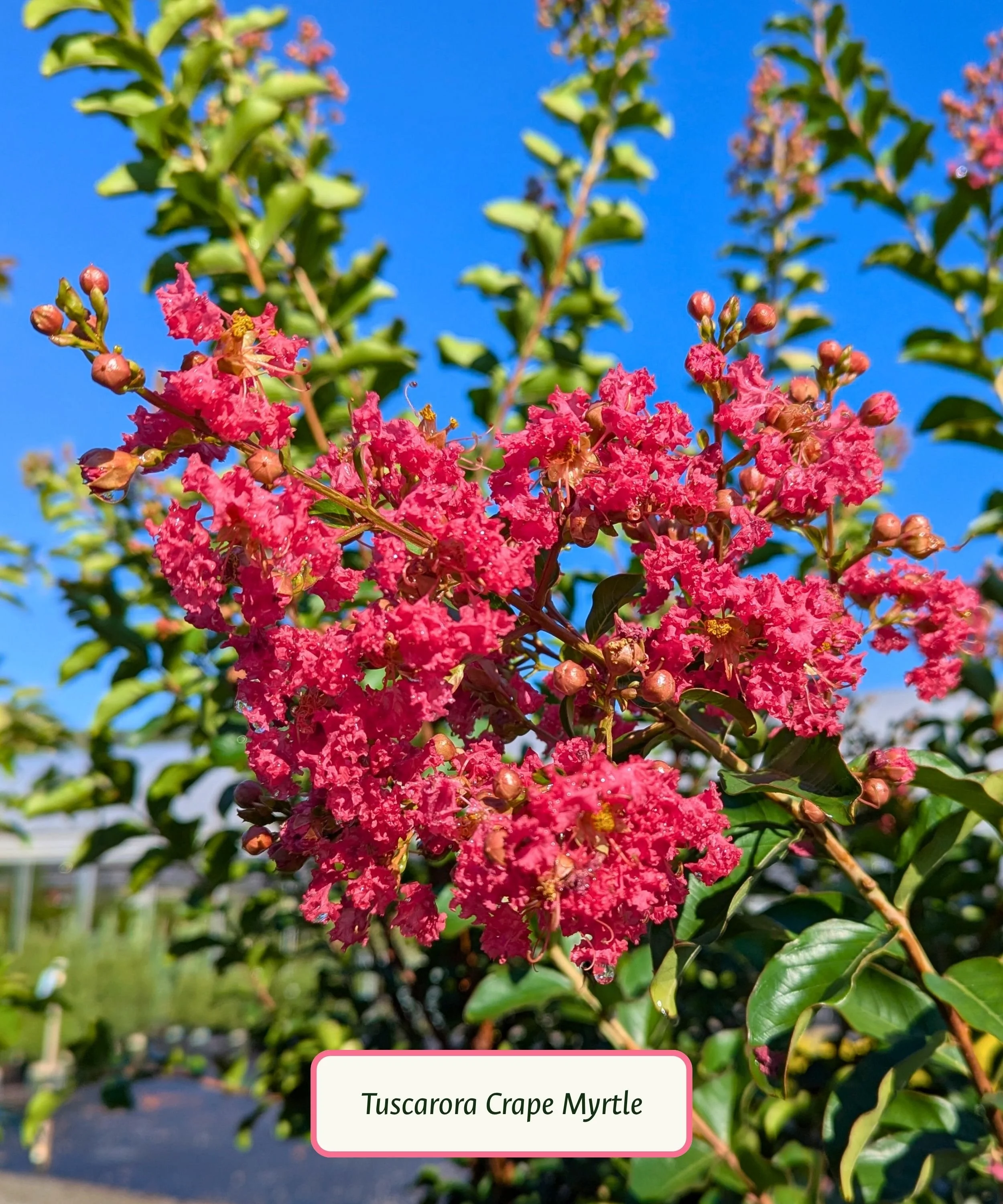 Image 4 of 5
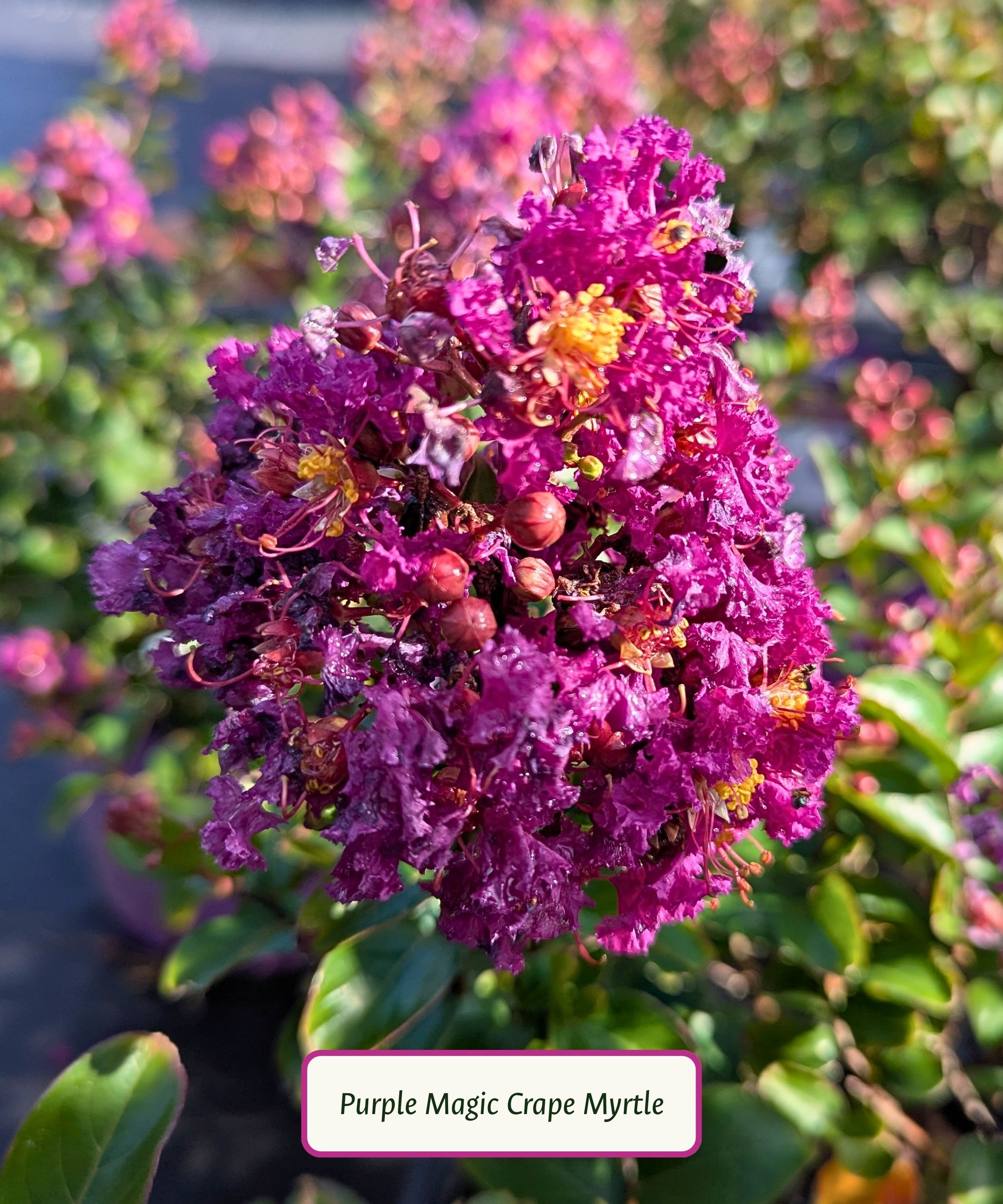 Image 5 of 5
Botanical Name: Lagerstroemia
Varieties we carry:
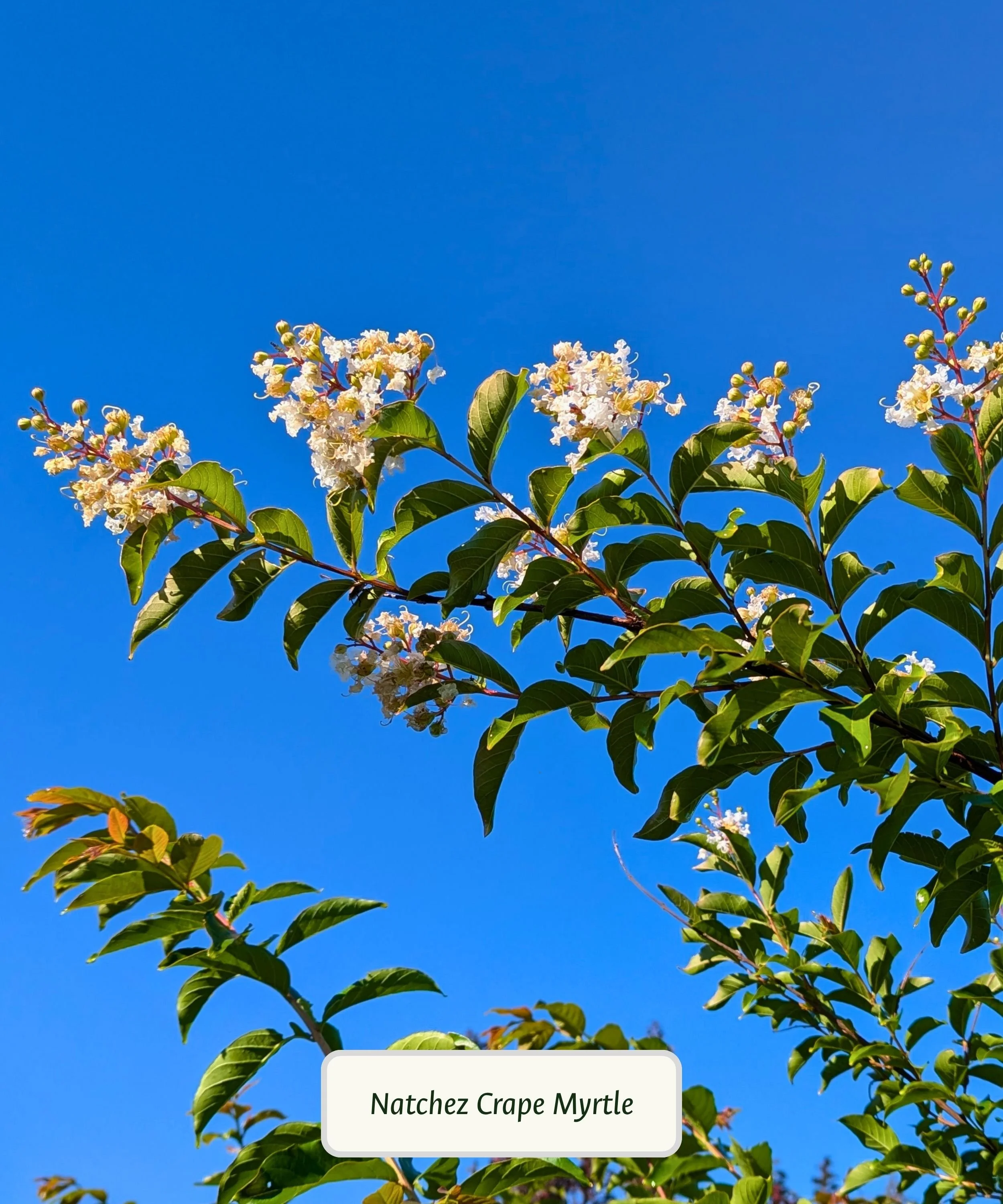
Natchez
Colorama Scarlet
Thunderstruck (Ruby, White Lightning, Rumblin Red, Coral Boom, Lavender Blast)
Black Diamond Purely Purple
Tonto
Princess Holly Ann
Tuscarora
Muskogee
Purple Magic
The following varieties may be available for special request: Zuni, Hopi, Plum Magic, Catawba, Dynamite, Red Rocket, Double Feature, Pink Velour, Rhapsody in Pink.
Seasons of availability: All year.
Crape myrtle is a small deciduous tree with many species and varieties exhibiting showy flowers in Summer to Fall. Crape Myrtle is often multi-stem, but they can be trained into a “Tree Form” with a single stem. Crape Myrtle bark is smooth and grey, but some varieties like Natchez exfoliate to reveal a cinnamon color underneath. Large flower clusters range in color from white, pink, purple to deep red. Crape myrtle is moderately deer resistant, but they may have issues with aphids, bark scales, Japanese Beetle and several fungal concerns including powdery mildew and Cercospora leaf spot. Bark scale is the only serious concern, but it is treatable with a systemic insecticide. Crape myrtle offers moderate wildlife value with flowers attracting pollinators like bees and beneficial insects. Crape myrtle is used as a specimen in a variety of ways including as a centerpiece in lawns, at entrances, in recreational play areas and pollinator gardens. Groups of crape myrtle are commonly used as a hedge, privacy screen or street tree.
Crape myrtle does best in full sun and well drained soil, but it is very adaptable to a variety of soil types. Crape Myrtle requires ample moisture during establishment, but it can become quite drought tolerant once established. Crape Myrtle is hardy to growing Zones 6-9. We recommend against yearly topping of Crape Myrtles (often called Crape Murder) which results in long weak shoots. Heavy fall pruning may invite Ambrosia Beetle attacks to the bark, which is devastating to the tree. The architectural framework and bark of Crape Myrtles are highly desirable and deserve proper pruning. Mulch the prepared soil base to retain moisture and fertilize with a slow-release fertilizer to encourage new growth.
Botanical Name: Lagerstroemia
Varieties we carry:
Natchez
Colorama Scarlet
Thunderstruck (Ruby, White Lightning, Rumblin Red, Coral Boom, Lavender Blast)
Black Diamond Purely Purple
Tonto
Princess Holly Ann
Tuscarora
Muskogee
Purple Magic
The following varieties may be available for special request: Zuni, Hopi, Plum Magic, Catawba, Dynamite, Red Rocket, Double Feature, Pink Velour, Rhapsody in Pink.
Seasons of availability: All year.
Crape myrtle is a small deciduous tree with many species and varieties exhibiting showy flowers in Summer to Fall. Crape Myrtle is often multi-stem, but they can be trained into a “Tree Form” with a single stem. Crape Myrtle bark is smooth and grey, but some varieties like Natchez exfoliate to reveal a cinnamon color underneath. Large flower clusters range in color from white, pink, purple to deep red. Crape myrtle is moderately deer resistant, but they may have issues with aphids, bark scales, Japanese Beetle and several fungal concerns including powdery mildew and Cercospora leaf spot. Bark scale is the only serious concern, but it is treatable with a systemic insecticide. Crape myrtle offers moderate wildlife value with flowers attracting pollinators like bees and beneficial insects. Crape myrtle is used as a specimen in a variety of ways including as a centerpiece in lawns, at entrances, in recreational play areas and pollinator gardens. Groups of crape myrtle are commonly used as a hedge, privacy screen or street tree.
Crape myrtle does best in full sun and well drained soil, but it is very adaptable to a variety of soil types. Crape Myrtle requires ample moisture during establishment, but it can become quite drought tolerant once established. Crape Myrtle is hardy to growing Zones 6-9. We recommend against yearly topping of Crape Myrtles (often called Crape Murder) which results in long weak shoots. Heavy fall pruning may invite Ambrosia Beetle attacks to the bark, which is devastating to the tree. The architectural framework and bark of Crape Myrtles are highly desirable and deserve proper pruning. Mulch the prepared soil base to retain moisture and fertilize with a slow-release fertilizer to encourage new growth.