 Image 1 of 1
Botanical Name: Vitex
Shoal Creek
Seasons of availability: All year
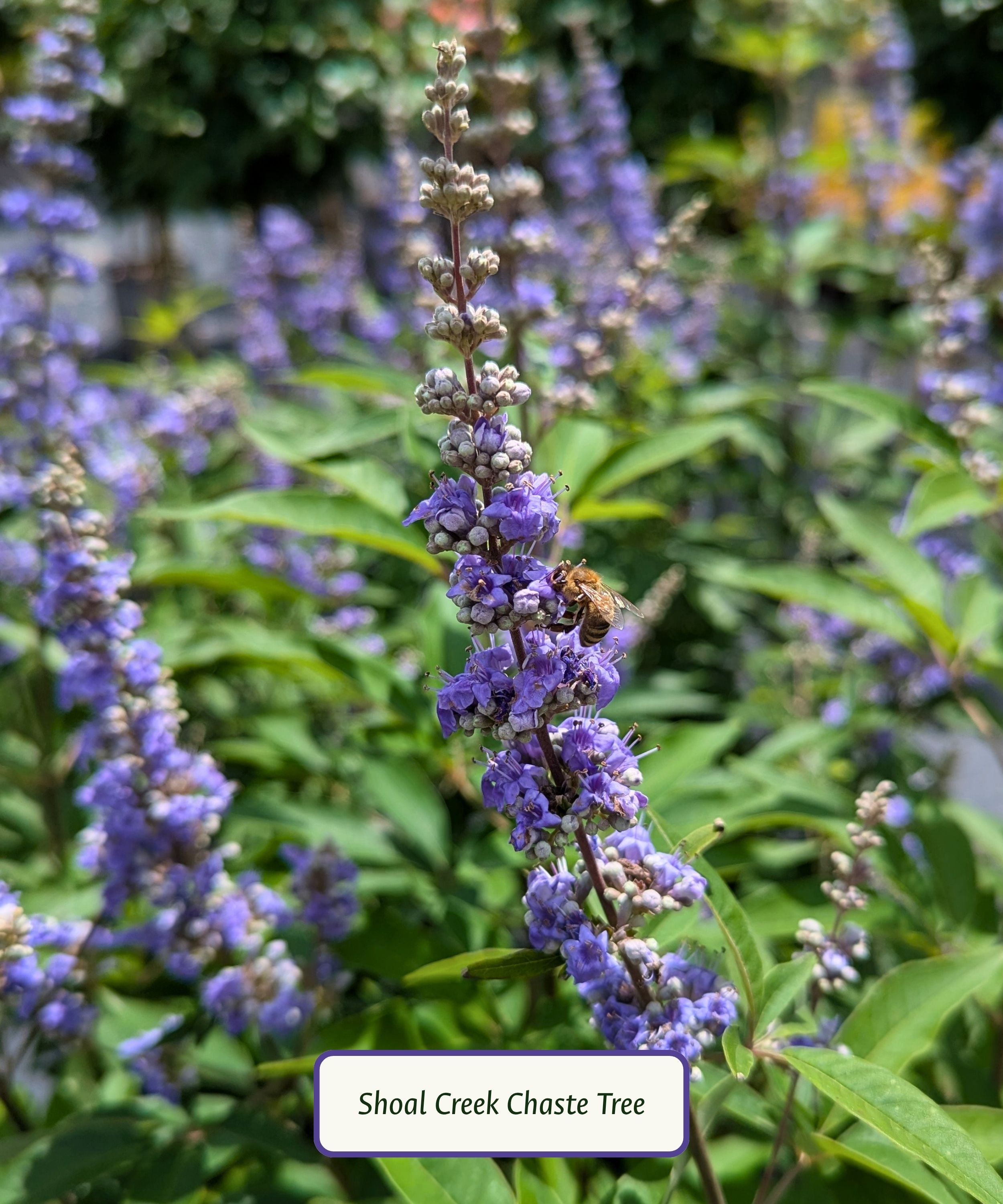
A woody, deciduous, highly reliable, small tree or shrub native to the Mediterranean. The Chaste Tree will rapidly grow to 10-15’ tall and 8-12 wide’. A durable plant that thrives in heat and drought with erect, open habit on gray, blocky bark. This tree has prominent, 3-6” racemes showing fragrant, lilac or pale violet flowers blooming sporadically from June through September. Chaste Tree can occasionally have issues with thrips and root rot in wet soils. They are considered to have very good deer resistance. In the landscape, Chaste Tree is a versatile landscape plant used as a small specimen tree, shrub, or hedge, ideal for pollinator gardens. Significant wildlife value, primarily as a major pollinator magnet, attracting bees, butterflies, moths, and hummingbirds with its fragrant, nectar-rich summer flowers.
Chaste Tree prefers full, melting hot sun and can tolerate a variety of soil conditions. Once established, this plant prefers drier conditions over rich, moist ones that promote excessive growth. Pruning can be done in early Spring as flowering occurs on new wood. Prune faded flowers to promote continuous flowering. Flowering will be more spectacular if the plant is heavily pruned after blooming. Chaste Tree is hardy in growing Zones 7-8. Mulch the prepared soil base to retain moisture and fertilize with a slow-release fertilizer to encourage new growth.
Botanical Name: Vitex
Shoal Creek
Seasons of availability: All year
A woody, deciduous, highly reliable, small tree or shrub native to the Mediterranean. The Chaste Tree will rapidly grow to 10-15’ tall and 8-12 wide’. A durable plant that thrives in heat and drought with erect, open habit on gray, blocky bark. This tree has prominent, 3-6” racemes showing fragrant, lilac or pale violet flowers blooming sporadically from June through September. Chaste Tree can occasionally have issues with thrips and root rot in wet soils. They are considered to have very good deer resistance. In the landscape, Chaste Tree is a versatile landscape plant used as a small specimen tree, shrub, or hedge, ideal for pollinator gardens. Significant wildlife value, primarily as a major pollinator magnet, attracting bees, butterflies, moths, and hummingbirds with its fragrant, nectar-rich summer flowers.
Chaste Tree prefers full, melting hot sun and can tolerate a variety of soil conditions. Once established, this plant prefers drier conditions over rich, moist ones that promote excessive growth. Pruning can be done in early Spring as flowering occurs on new wood. Prune faded flowers to promote continuous flowering. Flowering will be more spectacular if the plant is heavily pruned after blooming. Chaste Tree is hardy in growing Zones 7-8. Mulch the prepared soil base to retain moisture and fertilize with a slow-release fertilizer to encourage new growth.